PLEASE NOTE: many of these old news stories are no longer stored on the respective newspaper websites, or the websites themselves no longer exist - so some of the clickable links may not be available.
2001
23 February 2001
President's role in environmental strategy studied (Source: Gulf News)
13 April 2001
Early Abu Dhabi settlement 'was regional trade hub (Source: Gulf News)
14 April 2001
Archaeological conference to span UAE's entire history (Source: Gulf News)
17 April 2001
More Research Papers Presented At UAE Archaeology Meet (Source: WAM)
String of coastal sites 'indicates Bronze Age shipping route' (Source: Gulf News)
27 May 2001
Abu Dhabi Archaeological Survey's new website aims to spread heritage message (Source: Gulf News)
13 July 2001
ADIAS researcher receives Doctorate of Philosophy in Archaeology at University of York, U.K.
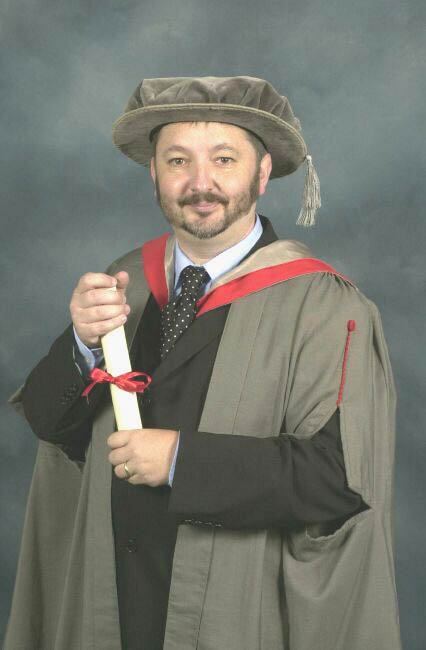
The degree of Doctorate of Philosophy in Archaeology was conferred upon Mark Beech in a ceremony held at the University of York, U.K. This was presented by the Vice-Chancellor of York University, Professor Ron Cooke, BSc MSc PhD DSc FRGS. Dr. Beech has worked for ADIAS since 1994 and is the Environmental Archaeology and IT Director of the Abu Dhabi Islands Archaeological Survey. The title of his thesis was: "In the Land of the Ichthyophagi: Modelling fish exploitation in the Arabian Gulf and Gulf of Oman from the 5th millennium BC to the Late Islamic Period". To obtain further details concerning Dr. Beech's research visit his website.
13 August 2001
ADIAS PRESS RELEASE:
History Comes Home - With Help from Emirates
Emirates, the Dubai-based international airline, has one of the most modern fleets in the skies - yet it still takes a keen interest in the past. Average age of its aircraft is now less than three years, while in contrast a package which has flown back to the UAE from Sydney, Australia, on an Emirates 777 contained some of the earliest evidence of human settlement in the country, more than 5,000 years ago.
Ancient artefacts and data collected during excavations on Marawah island, 120 kilometres west of Abu Dhabi, were returning to ADIAS, the Abu Dhabi Islands Archaeological Survey, which is undertaking archaeological studies of its coast and islands.
Australian archaeologists Dr. Soren Blau of the Australian National University in Canberra, Jodie Benton, formerly of Sydney University, and Nadia Iacono and Graham Wilson, of Sydney archaeological consultancy Godden-Mackay, carried out excavations on Marawah from 1997 to 1999 under the aegis of ADIAS. They examined tombs from the early Bronze Age more than 5,000 years old, and sent some finds to Australia for radiocarbon dating and other analysis, as the techniques required are not available in the UAE.
Now, with scientific analysis complete, the finds and detailed records of the excavations have come home safely to ADIAS via Dubai, thanks to careful handling by Emirates SkyCargo, and the results are being prepared for publication.
Since it was established by UAE President HH Sheikh Zayed bin Sultan al Nahyan in 1992, ADIAS has received considerable help from Emirates - but this is the first time the airline has been entrusted with flying its finds half way round the globe.
Peter Hellyer, ADIAS Executive Director, said: "Scientific analysis in Australia of these finds from Marawah has provided valuable new information on the ancient heritage of the people of the Emirates. Because of their importance, we could only entrust them to an airline with a proven record of swift, safe and efficient cargo handling. Emirates meets that requirement perfectly."
Peter Sedgley, Emirates' General Manager Cargo Commercial Operations, said this week: "We have a solid reputation for the safe and timely delivery of sensitive shipments, so we were happy to assist ADIAS in bringing the artefacts home. Though we're young, like the UAE, we greatly cherish the country's irreplaceable historical heritage."
2002
3 February 2002
PRESS RELEASE:
New Archaeological Discoveries in Fujairah and Ras Al Khaimah
Important new archaeological discoveries have been made on the coastal plain of Fujairah and in southern Ras Al Khaimah, not far from the village of Muna’i as a result of work being carried out in association with the building of the new water pipeline from the Fujairah coastal town of Qidfa to Al Ain, it is announced today.
The water pipeline, and an associated desalination plant are being constructed for the new Union Water and Electricity Company, UWEC, created last year under the aegis of the UAE Offsets Group. The plant will have an installed daily production capacity of 620 mg of electricity and 100 million gallons of water, with water being pumped through a pipeline over the Hajar Mountains to Al Ain.
In accordance with relevant federal and local environmental protection legislation, UOG requires that environmental studies and archaeological surveys are carried out as an integral part of all projects, in order to identify and, where possible, to protect areas of environmental or archaeological sensitivity.
As part of this process, experts from the Abu Dhabi Islands Archaeological Survey, ADIAS, were commissioned to undertake an environmental and archaeological baseline study of the 180 km. pipeline route from Qidfa, around 20 km. north of Fujairah City, to Al Ain. During the survey, over 20 previously unrecorded archaeological sites were identified. Of these, the most significant were in the southern part of Ra’s al-Khaimah, near Manduk and Muna’i, and on the Fujairah coastal plain, at Qidfa itself and near the village of Qurrayah.
Following the identification of the sites, UOG, ADIAS, and representatives of the pipeline contractors, Technip / Al Jaber, and of consultants Fichtner and Dames and Moore worked together last month to agree on the necessary action to protect or investigate the sites. For those in the mountains, which included a large copper-smelting complex dating back to the mid and Late Islamic period (14th to 17th centuries AD), and near Qurayyah, it was decided to make minor amendments to the pipeline route and to fence the archaeological sites so that they could be investigated at a later date.
The sites at Qidfa, however, lie close to the desalination plant and associated tank farm, and an alternative route for the pipeline did not exist.
It was, therefore, decided that an urgent archaeological investigation be undertaken by ADIAS at Qidfa. Working closely with representatives of UOG and Technip / Al Jaber, the ADIAS team, led by Academic Director Dr. Geoffrey King, of London University, first surveyed and marked the sites, to identify those which would be affected by the pipeline route.
This was followed by a systematic collection of all pottery from the surface of the site. Study of the pottery shows that while much of it can be dated to the Late Islamic period (15th Century to 18th Century), some comes from the early and mid-Islamic periods (7th to 14th Century), and some is of Late pre-Islamic date (3rd to 7th Century AD). Some other pieces of pottery have not yet been definitely identified, but may date back to the local Iron Age (1300 – 300 BC), or even to the Bronze Age (c. 3000 BC to 1300 BC).
With the pottery collection completed, Dr. King and an associate then excavated some of the ancient architectural features visible on the Qidfa plain. He was assisted by labourers provided by the Fujairah Museum on the instructions of Supreme Council member and Ruler of Fujairah His Highness Sheikh Hamad bin Mohammed Al Sharqi, who also provided useful advice on the minor re-routing of the pipeline at Qurayyah.
The features examined by the ADIAS team included an ancient falaj (irrigation channel) a large wall and the remains of a fortified tower and two adjacent walls, perhaps originally a defensive structure. Almost all of these have now been protected with fencing.
Further work at Qidfa is planned for later this month, while, with the key sites now clearly identified, construction of the pipeline route is continuing as planned.
According to Dr. King: “there is extensive evidence of occupation from elsewhere on the Fujairah coastal plain from the Late Islamic period and from the Bronze and Iron Ages. The evidence of occupation at Qidfa during the Late pre-Islamic and early Islamic periods represents, however, an important addition to the historical picture of occupation along the East Coast. The enlightened approach displayed by UOG has contributed in a very significant way to our knowledge of the UAE’s past.”
Mubarak Al Dhahiri, of the UAE Offsets Group, commented: “Protection and preservation of the environment and heritage of the United Arab Emirates is an important part of the philosophy of UOG. While our main concern is, of course, to contribute to the development of the country, we are determined to ensure that, wherever possible, this is undertaken within the framework of conserving our past. This exercise at Qidfa and elsewhere along the pipeline route shows clearly that the two objectives can be pursued side by side. We will continue to work with ADIAS and with the various environmental agencies throughout the country to safeguard the national heritage of the UAE.”
13 February 2002
More water reservoirs found on Futaisi isle (Source: Gulf News)
Spanish team to resume excavations (Source: Gulf News)
25 February 2002
Study of Jebel Dhanna sulphur mines completed
PRESS RELEASE -25th February 2002
A fourth phase of archaeological investigations into a complex of sulphur mines at Jebel Dhanna, in Abu Dhabi’s Western Region, has recently been completed by the Abu Dhabi Islands Archaeological Survey, ADIAS, it is announced today.
The investigations were carried out with the support of the Abu Dhabi Company for Onshore Oil Operations, ADCO, and focused on the part of Jebel Dhanna that falls within the oil export terminal facilities of ADCO.
The sulphur mines, the only ones of their type known anywhere in the United Arab Emirates, were first recorded by ADIAS during an Archaeological Baseline Study of the ADCO concession area in 1998. The second and third phases of study of the mines were carried out in 2000 and 2001, and the recent work brings to an end the fieldwork component of the ADIAS study. The recent fieldwork was directed by Daniel Hull, ADIAS’s Resident Archaeologist, with the support of Stephen Rowland, an environmental archaeologist from York, in Britain.
In all, a total of 180 mine shafts have been recorded by ADIAS within the ADCO terminal area, some going as deep as 10 or 12 metres into the hillside. Many are also linked to underground chambers and tunnels, with domed roofs, ledges, ventilation and light holes and steps cut in the rock to allow access from above. Preliminary estimates suggest that as much as 1500 cubic metres of rock may have been removed during the mining operations, with as much as 90 tonnes of sulphur being recovered. The remains of a number of collapsed rock shelters and water catchment systems have also been recorded by the ADIAS team, while environmental data has been recovered which will help to provide an idea of what the miners ate, and how they lived.
With the fieldwork component of the investigations now completed, the ADIAS team are now analysing the finds from the mines, and are also arranging for radiocarbon dating to be carried out on ash and charcoal recovered from the vicinity of some of the shafts. This will help to provide an idea of the date of the mining operations.
Pottery collected from around the mine sites is from the Late Islamic period, 100 to 400 years ago. Historical research, however, has not yielded any references to the mining operations over the last couple of hundred years, and it seems, therefore, that the main phase of activity at Jebel Dhanna may have taken place 200 to 400 years ago. A regional trade in sulphur is known from the late 17th and 18th Centuries, with records of sulphur shipments being known from mines on the Iranian side of the Arabian Gulf.
Once the analysis of the finds is complete, ADIAS plans to prepare a special publication on the Jebel Dhanna mines.
“We are delighted, once again, to be able to thank ADCO for their support for our work,” ADIAS Executive Director Peter Hellyer said. “Since the Abu Dhabi Islands Archaeological Survey was established in 1991, we have been able to count on ADCO for support, and we are particularly grateful for the facilities they have extended to us for research in the onshore oilfields and other parts of their concession area.”
ADIAS has so far identified around 125 archaeological sites within ADCO’s sphere of operations.
Welcoming the completion of the ADIAS fieldwork, ADCO General Manager Andre van Strijp commented: “Under the terms of its Health, Safety and Environment, HSE, policy, ADCO is committed to the identification and preservation of the national heritage of the United Arab Emirates. In particular, it is an essential part of this policy that archaeological sites within the Company’s operational areas are protected and studied. We are delighted to have been able to work with ADIAS on the investigation of these sulphur mines, which are an important part of the industrial
history of the UAE.”
The Abu Dhabi Islands Archaeological Survey was established on the instructions of President His Highness Sheikh Zayed bin Sultan Al Nahyan in 1991, and operates under the patronage of His Highness Lieutenant General Sheikh Mohammed bin Zayed Al Nahyan. Charged with responsibility for archaeological and fossil sites on the coast, islands and elsewhere in Abu Dhabi’s Western Region, it has so far recorded over 1000 archaeological sites.
More details of ADIAS activities can be found on its website: www.adias.ae
26 February 2002
Team analyses archaeological sulphur mines (Source: Gulf News)
11 March 2002
New light shed on Dalma site (Source: Gulf News)
9 April 2002
Archaeological treasures in focus (Source: Gulf News)
27 April 2002 - British experts undertake study of UAE crabs
ADIAS PRESS RELEASE - 27th April 2002:
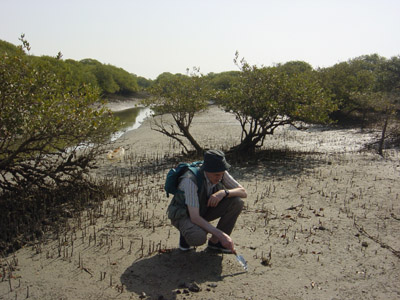
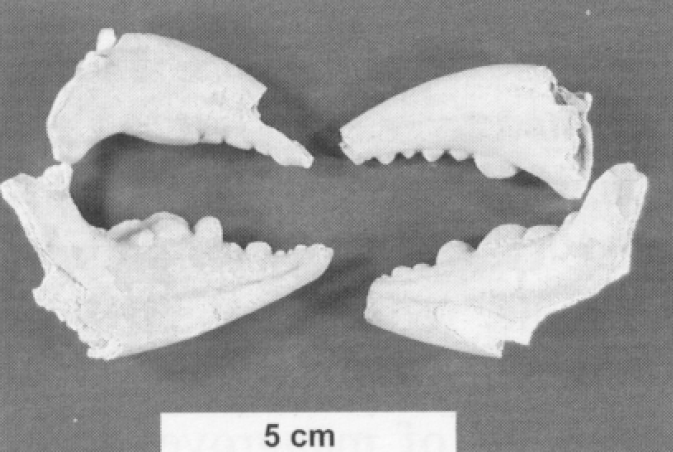
Two British scientists have recently completed a study of UAE crabs. Dr. Peter Hogarth, a marine biologist from the Department of Biology at the University of York in the UK, and Dr. Mark Beech, of the Abu Dhabi Islands Archaeological Survey (ADIAS) and a Research Fellow in the Department of Archaeology at the University of York, have been systematically recording and collecting the crab species which occur along the coastline of the United Arab Emirates.
The purpose of this study is to compile a reference collection in order to identify archaeological crab remains recovered from a number of archaeological excavations in the Emirates. The crab reference collection resulting from this study will in the future be retained within the Marine Environment Research Centre (MERC) which is part of the Environmental Research and Wildlife Development Agency (ERWDA) in Abu Dhabi.
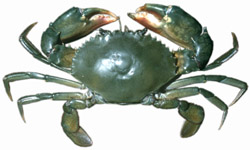
An important part of Hogarth and Beech's work is a baseline study which maps the occurrence of modern day crab species along the UAE coastline. One of the interesting outcomes of their work is the first authenticated record in the Arabian Gulf of the crab species, Scylla serrata or mangrove crab. Although the presence of mangrove crabs has been suspected from observation of burrows, or from anecdotal evidence, no firm records existed until recently, when a single specimen was reported from Ras al-Khaimah, caught in a mangrove lagoon. A note on this has recently been published by Hogarth and Beech in the locally produced publication, "Tribulus", the journal of the Emirates Natural History Group.
The mangrove crab is the largest of the swimming crabs (family - Portunidae), reaching a carapace breadth of 22-23 cm and a weight of 1.5 - 2.0 Kg. It is widespread in the Indian Ocean and western Pacific, and in many areas is an important food species either trapped or reared in aquaculture systems. This species is strongly associated with mangroves, where it spends much of its life cycle, excavating burrows in the soil from which it emerges to forage.
Remains of mangrove crab have been recognised at several archaeological sites in the Emirates including the Iron Age site of Rafaq in the Wadi al-Khawr, and in Sasanian/Islamic levels at Kush in Shimal, Ras al-Khaimah. The Rafaq site is located some 25 km inland from Kalba on the east coast of the Emirates. The strong association of this particular crab species with mangroves indicates that human populations were dependent on mangroves, and were already exploiting them for food and other resources like fuel and timber, as long as 3000 years ago.
Why should a species, once abundant enough to be a significant food source, have largely vanished from the Arabian Gulf? The most probable explanation in this case is the loss of the mangrove habitat. In the past mangroves were much more widespread in the Gulf. Their use as timber for architecture and boat-building, as well as for fuel, has severely depleted mangroves in the Gulf, reducing them in area and diversity to relatively small patches, almost exclusively of the Grey mangrove, Avicennia marina.
28 April 2002
British scientists complete study on crabs (Source: Gulf News)
7 May 2002
New Finds prove importance of Abu Dhabi Airport Archaeological Site
ADIAS PRESS RELEASE on 7 May 2002
Further fieldwork carried out at an archaeological site at the Abu Dhabi Airport Golf Club, coupled with a detailed study of the flint tools recovered during earlier work at the site have confirmed the importance of the site during the Late Stone Age period, around 5,500 to 4,000 BC, it is announced today.
The Airport site was first discovered on a range of low hills inside the perimeter of the Golf Club in 1995, when a short season of fieldwork was undertaken by the Abu Dhabi Islands Archaeological Survey, ADIAS. That work showed that the site had been occupied during the Late Stone Age, the early to middle Bronze Age, around 3,000 BC to 2,000 BC, and in the Late pre-Islamic period, around the beginning of the Christian era.
During late April, a review of the stone tools and animal remains from the site was undertaken by the ADIAS flint tools expert, Dr. Heiko Kallweit, from Germany's University of Freiburg, with the assistance of Dr. Mark Beech, ADIAS environmental archaeologist from Britain's University of York. This involved a detailed re-examination of material collected during the 1996 field season, as well as two further visits to the site, to search for new material that might have been uncovered as a result of the rains early last month.
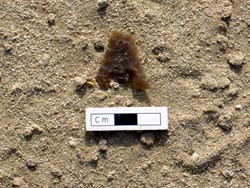
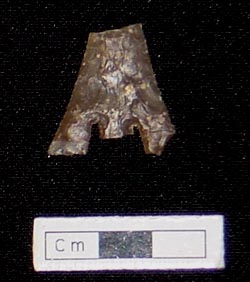
"This review and the two site visits have produced valuable new information," Dr. Kallweit said today. "The site was proved to extend further than had been originally recognised, and a nearly complete flint arrowhead was recovered on the southern fringes of the site (Figures 1-2), as well as a lot of other worked flint material. The arrowhead was of a type not previously known to have been found in the United Arab Emirates, although similar examples have been found in western Saudi Arabia and in Qatar. This find provides valuable new information on the possibility of trading routes stretching right the way across the Arabian peninsula during the Late Stone Age period."
During the site visits, Dr. Kallweit also found a tiny crescent-shaped fragment of worked flint, known as a microlith, that provides useful insight into the way of life of the UAE's Late Stone Age inhabitants. Two further examples were also identified during the detailed review of material collected during the earlier phase of fieldwork.
"The three pieces are "teeth" of flint that would have been set into a wooden handle for use as an early sickle or knife for cutting grasses," Kallweit said. "Once again, no evidence of such a sickle has previously been recorded in the Emirates, although examples are known from other regions in the Near East. The discovery confirms that the people were harvesting grasses or grains, although it is not possible yet to determine whether they were growing crops, or just harvesting wild plants."
Along with evidence of sheep, goat and cattle bones found on archaeological sites on Dalma, in the far west of the UAE, and at Jebel Buhais, in Sharjah, the sickle pieces confirm that the Late Stone Age inhabitants of the UAE were not simple hunters and gatherers, but were a pastoral community with a much broader economic base to their lifestyle, Kallweit says.
The newly-identified information has prompted ADIAS to plan for a further season of fieldwork at the Airport site next winter.
James McLean, Manager of the Abu Dhabi Airport Golf Club, welcomes the ADIAS plan.
"The Club and its members are proud to have such an valuable archaeological site within its course," he said. "No other golf club in the country has anything like it, and we will provide ADIAS with any facilities and help that we can in order to help them discover more information about the site. We look forward to working with ADIAS next winter on this important study into the UAE's heritage and history."
The first phase of archaeological investigations at the Abu Dhabi Airport Golf Club in 1996 were undertaken by ADIAS with the support of the Chairman of Abu Dhabi's Civil Aviation Department, HE Sheikh Hamdan bin Mubarak Al Nahyan, and were supported by the Abu Dhabi Duty Free.
"Our first phase of work proved the importance of this site, and we are grateful for the support provided by Sheikh Hamdan and by Abu Dhabi Duty Free, and for the way in which they have helped to preserve the site," says Peter Hellyer, the ADIAS Executive Director. "We hope that next winter's work will not only lead to yet more important discoveries, but will also show the way in which bodies like Civil Aviation and Duty Free, as well as the Golf Club, can work together with us in the protection of the country's heritage."
8 May 2002
More Late Stone Age artefacts found (Source: Gulf News)
12 May 2002
New results from Sir Bani Yas study
ADIAS PRESS RELEASE on 12 May 2002:
A short season of studying excavated material from pre-Islamic Christian archaeological sites on Abu Dhabi's islands of Sir Bani Yas and Marawah undertaken by specialists working for the Abu Dhabi Islands Archaeological Survey, ADIAS, has yielded important new dating about the structure of the settlements, and about their cultural links with elsewhere in the peninsula, it is announced today.
The two sites, identified by ADIAS in 1992, on Sir Bani Yas, and 2000, on Marawah, are the only confirmed archaeological evidence of the presence of Christians in south-eastern Arabia in the period immediately before the coming of Islam in the 630s.
The Director of the excavations at the two sites, Dr. Joe Elders, who is also in charge of archaeology for many of Britain's churches, and Dr. Emma Loosley, from the University of York, an expert in the early history of Christianity in the Arab Middle East, completed a two week study of the pottery and plaster from the Sir Bani Yas and Marawah sites last month.
According to Elders and Loosley, a study of the plaster from the Sir Bani Yas site indicates that the inhabitants of the monastery were influenced by cultural links with Arab Christian communities in parts of the Levant, such as Syria. Historical research carried out by Elders and Loosley also suggests that the Christian communities of the Gulf were also closely involved in the pearling industry prior to the coming of Islam to the region.
As part of plans for further study of the plaster, pottery and glass fragments from the sites, ADIAS will shortly be sending some samples to Britain for examination. This will permit comparisons to be made with other material from the middle of the First Millennium AD from the Gulf, Mesopotamia and Syria.
Help in shipping the samples is being provided to ADIAS by the UAE representative office of oil company BP, (formerly British Petroleum), which has supported the work of ADIAS for several years.
"We are delighted to be of assistance to ADIAS in their important programme of research into the heritage of the UAE," said Dr. Michael Daly, President, BP Gulf States Business Unit in Abu Dhabi. "BP has a history of nearly eighty years involvement with the country and is heavily involved in the UAE's current and future development programme, and it is a pleasure to extend this involvement into the field of historical research."
Said an ADIAS spokesman ,"Over the years since ADIAS was first established, it has benefited substantially from the support extended by the local and foreign oil sector, including BP " . We are most grateful for this continued support from BP, which will help us to undertake further scientific research into the results from these two important archaeological sites."
19 June 2002
Data on UAE fossils added to ADIAS website
ADIAS PRESS RELEASE on 19 June, 2002:
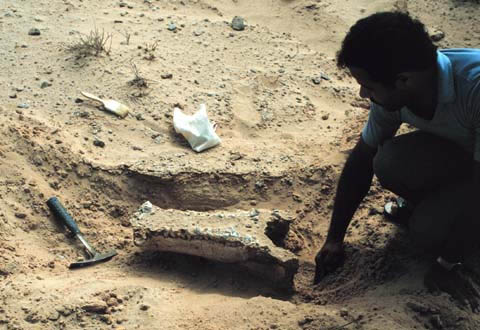
The Abu Dhabi Islands Archaeological Survey, ADIAS, has added full details of the six million year old fossils of Abu Dhabi's Western Region to its website, it is announced today.
Dating from the Late Miocene period, the fossils were discovered during the late 1980s and early 1990s by the Abu Dhabi Miocene Project, a joint research study directed by Peter J. Whybrow (Natural History Museum, London) and Andrew Hill (Yale University, U.S.A.). Support for the research was provided by the Abu Dhabi Company for Onshore Oil Operations, ADCO.
The majority of the fossils collected by the Natural History Museum/Yale University team come from Baynunah Formation outcrops located between the coast and the road from As Sila'a to Abu Dhabi.
They include fossil bones of early ancestors of the elephant, hippopotamus, horse, crocodile and other animals. They indicate that at the time the animals lived, what is now Abu Dhabi's Western Region was a lush savannah type landscape with wide and slow-moving rivers, somewhat like East Africa today.
In association with the Environmental Research and Wildlife Development Agency, ERWDA, ADIAS has now been assigned responsibility for study and protection of fossil sites in the coastal zone. During a meeting in London last month between Peter Whybrow and ADIAS representatives, it was agreed that a full database on the fossils would be added to the ADIAS website. Access to the new material can be gained through the following address:
"We would like to thank Peter Whybrow and his team for providing such an excellent and informative guide to the Miocene fossils of Abu Dhabi" said Dr. Mark Beech of ADIAS. "This information supplements our expanding web presence as one of the major providers of information concerning the archaeology and palaeontology of the region."
A full scientific account of the geology and palaeontology of the Miocene period in the Western Region of Abu Dhabi was published by Yale University Press in 1999 and titled "Fossil Vertebrates of Arabia", edited by Peter J Whybrow and Andrew Hill.
Relevant weblinks:
https://yalebooks.yale.edu/book/9781933789071/a-thousand-and-one-fossils/
http://www.adias.ae
21 June 2002
Data on 6 million-year-old fossils (Source: Gulf News)
3 September 2002
Focus on early coastal habitats (Source: Gulf News)
21 September 2002
Dates were eaten in UAE, Gulf during Bronze Age (Source: Gulf News)
22 November 2002
Future Perfect (Source: Gulf News) - read an article about Peter Hellyer, the Executive Director of ADIAS, which appeared in Gulf News Friday Magazine.
30 November 2002
TAKREER backs fossil research at Ruwais (Source: WAM) - read about how Takreer is sponsoring ADIAS's work on Miocene fossils in Abu Dhabi.
1 December 2002
Move to protect fossil site (Source: Gulf News)
2003
6 January 2003
First Stone Age Flints found in Abu Dhabi (Source: Gulf News)
Fossil tusk stuns experts (Source: Gulf News)
17 January 2003
Scientists thrilled by jumbo-sized discovery (Source: Northern Echo, UK)
Archaeologists taken to tusk (Source: This is York, UK)
18-19 January 2003
Article about the discovery of the fossil elephant tusk in Ruwais (Source: Al Quds Al Arabi, Vol.14, issue 4250 - in Arabic)


1 February 2003
Giant tusk found in desert (Source: University of York magazine)


5 February 2003
Ancient Elephant Tusk Found Near Ruwais (Source: Takreer News - Special Issue: Takreer and the Environment - Issue No. 39, February 2003)

1 March 2003
York University, ADIAS collaborative study (Source: Capital Letter Vol.4 Issue 4 Spring 2003, page 6 - British Business Group Abu Dhabi magazine)
1 April 2003
Abu Dhabi's fossils dated to Late Miocene Age (Source: Gulf News)


10 October 2003
A Plunge into the Past - article by Anjana Sankar (Source: Khaleej Times)


1 December 2003
"More help from TAKREER - More work on fossil finds" - Read an article in TAKREER News Issue No. 49 - December 2003 about how TAKREER has sponsored the work carried out on fossils at the Ruwais site.
9 December 2003
Ancient Elephant Footprints discovered in Abu Dhabi's Western Region (Source: WAM)
Fossilised footprints of elephants discovered (Source: Gulf News) 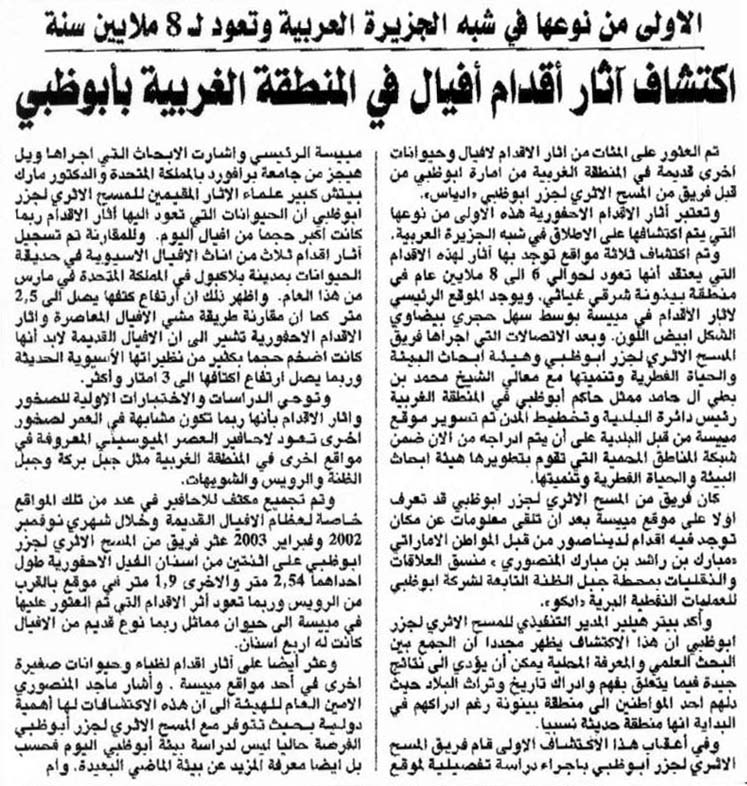
10 December 2003 (Source: Al Bayan)
10 December 2003 (Source: Al Fajr)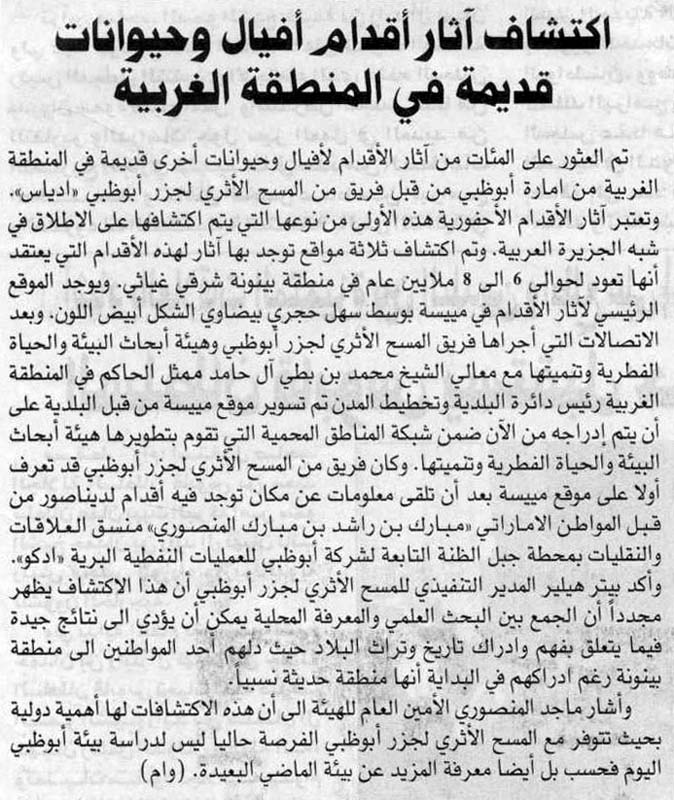
10 December 2003 (Source: Al Ittihad)
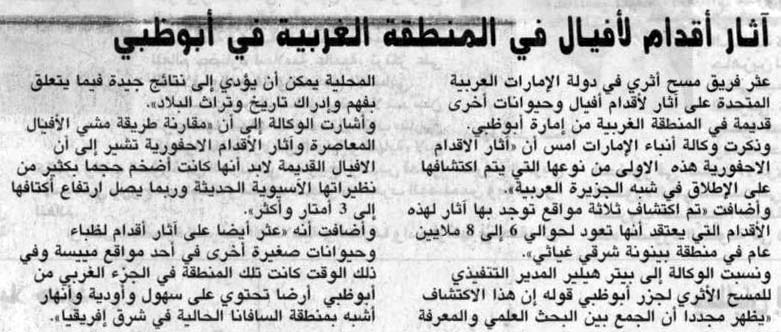
10 December 2003 (Source: Al Khaleej)


13 December 2003
Jumbo prints lead to giant elephant (Source: Bradford Telegraph and Argus)
16 December 2003
New book on Jebel Dhanna sulphur mines launched - part 1 - part 2 (Source: WAM)
2004
4 January 2004
7000 year-old houses discovered on Marawah island (Source: WAM)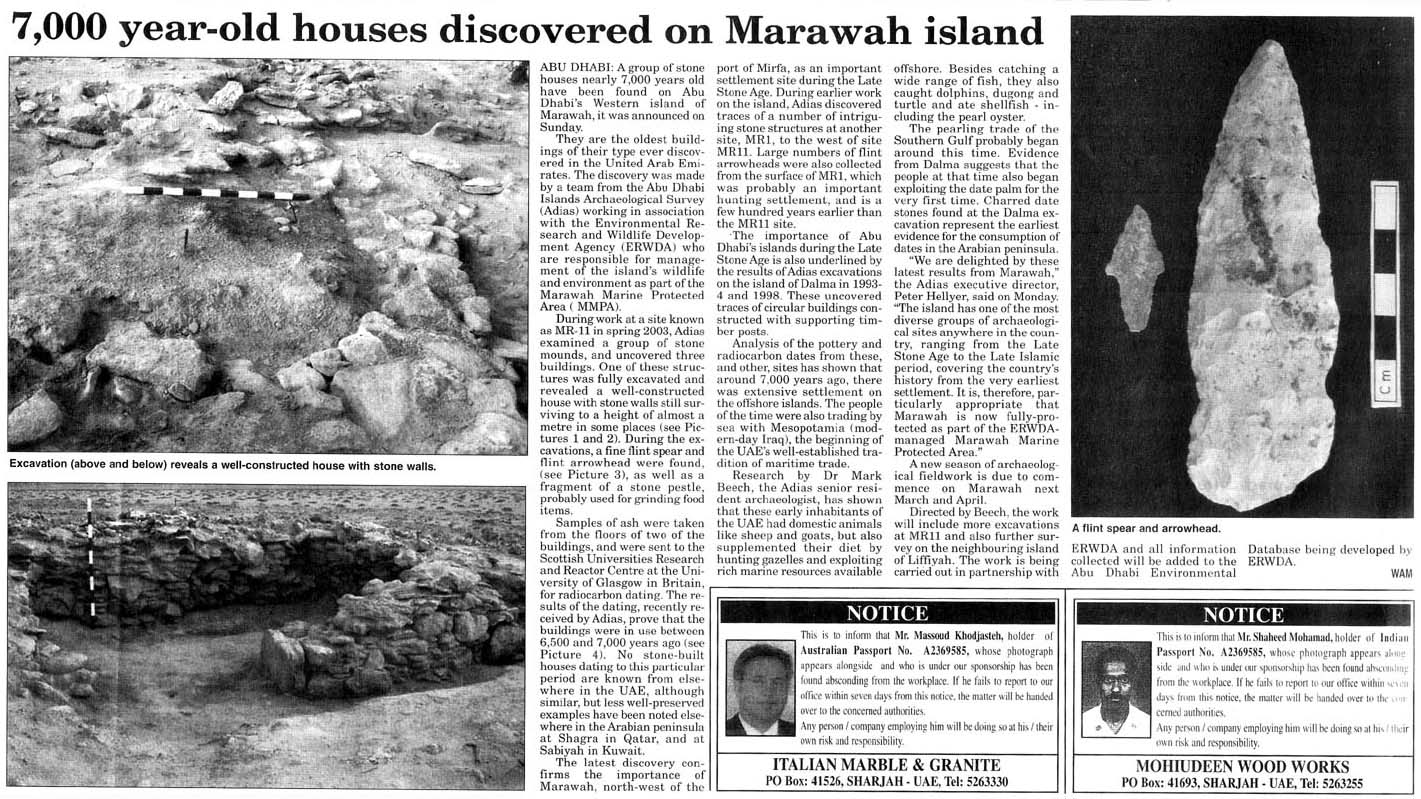
4 January 2004
7000-year-old houses found in UAE (Source: Gulf Today)
4 January 2004
Stone houses dating back 7,000 years discovered (Source: Gulf News)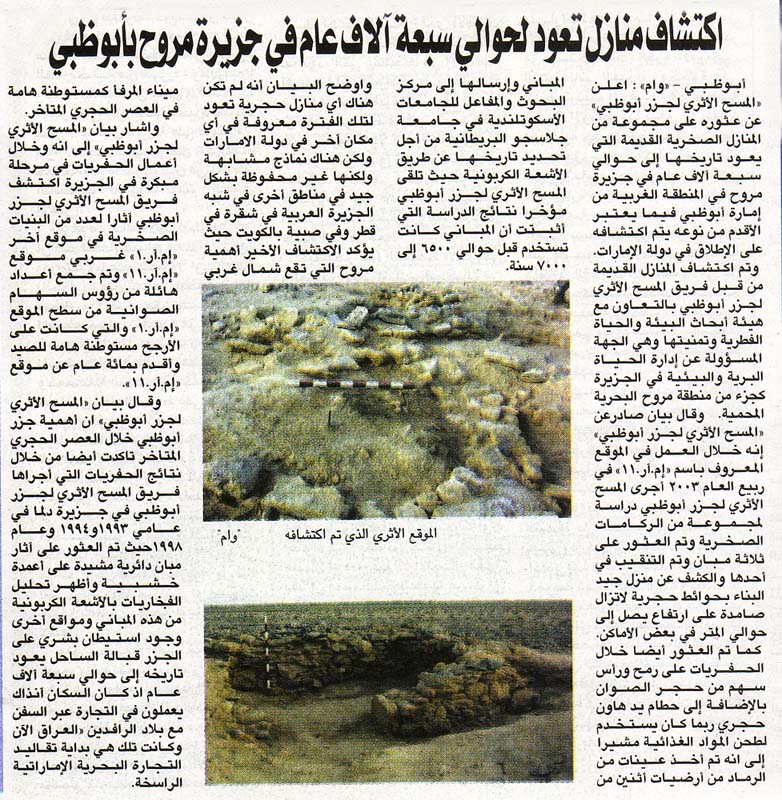
4 January 2004
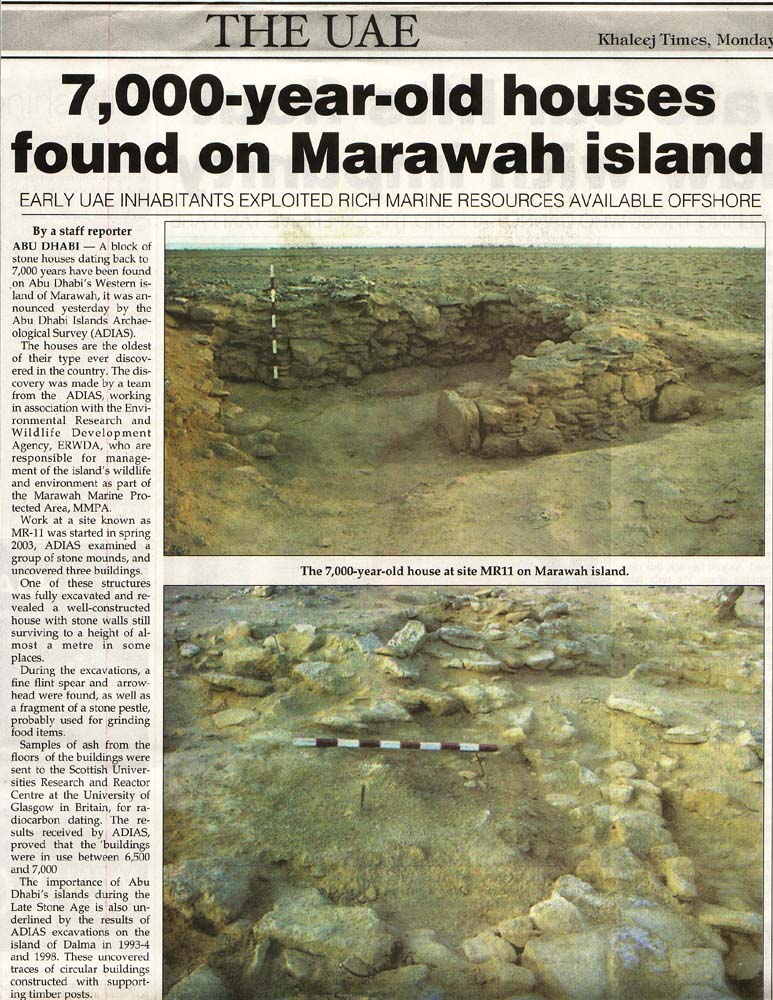
7000 year old houses on Marawah (in arabic) (Source: Al Wahda)
5 January 2004
7,000-year-old houses found on Marawah Island (Source: Khaleej Times)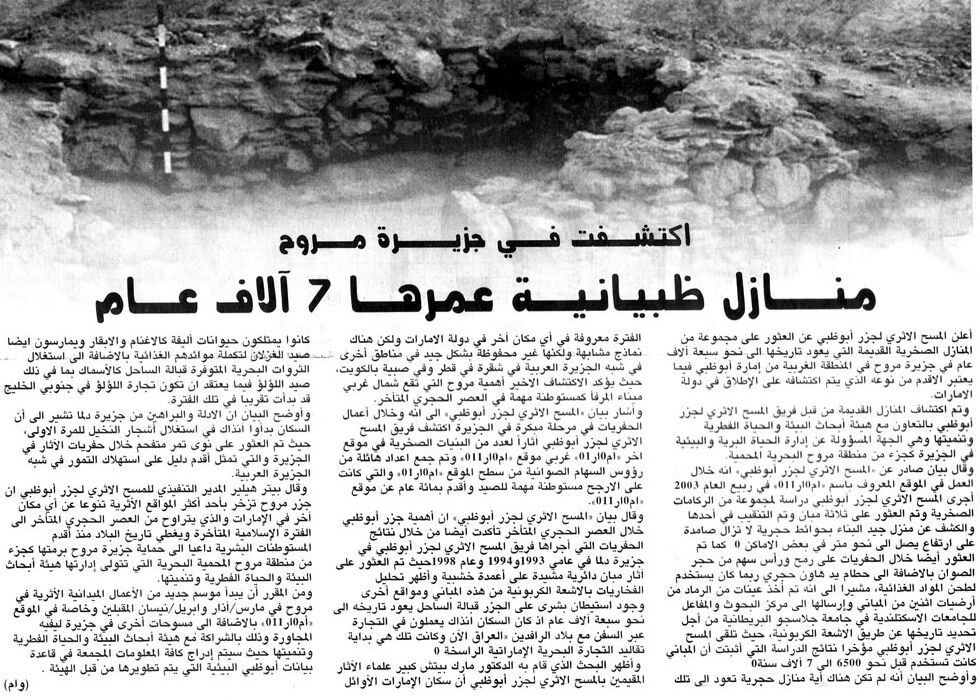
5 January 2004
7000 year old houses on Marawah (in arabic) (Source: Al Khaleej)
5 January 2004
7000 year old houses on Marawah (in arabic) (Source: Al Ittihad)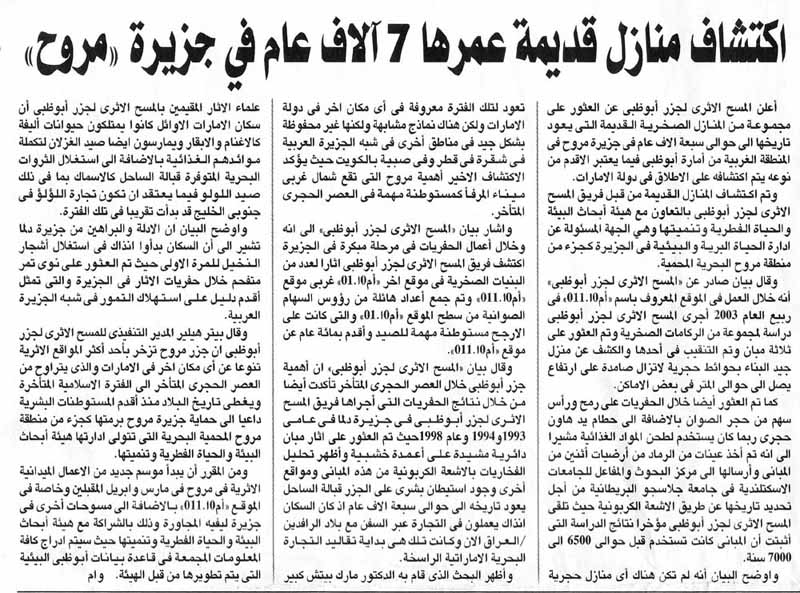
5 January 2004
7000 year old houses on Marawah (in arabic) (Source: Al-Bayan)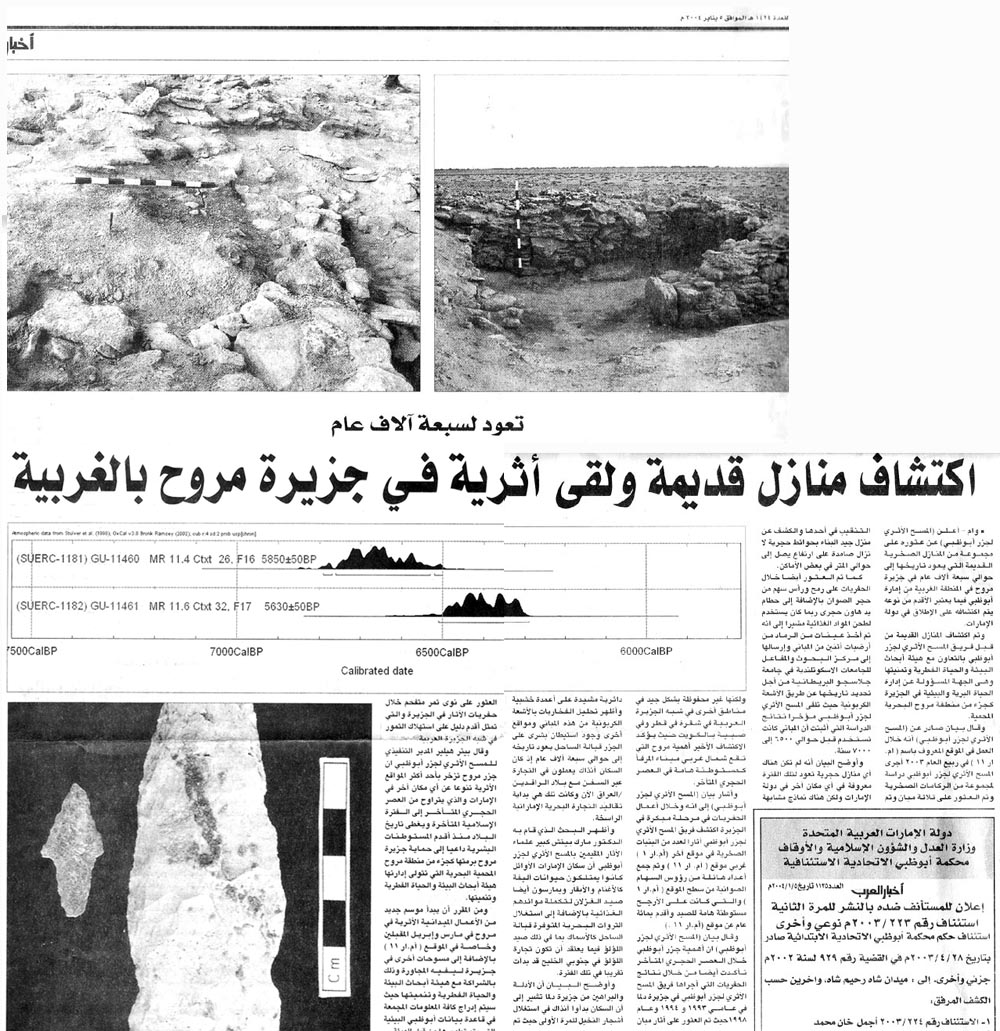
5 January 2004
7000 year old houses on Marawah (in arabic) (Source: Akhbar al- Arab)
6 January 2004
Remains of Late Stone Age houses found on Emirates island - by Rawya Rageh - Associated Press Writer
364 words
6 January 2004
17:21
Associated Press Newswires
English
(c) 2004. The Associated Press. All Rights Reserved.
DUBAI, United Arab Emirates (AP) - Archaeologists have discovered the remains of Stone Age houses going back 7,000 years on an island off the coast of the United Arab Emirates, an expert said Tuesday. The foundations of three dwellings were found on Marawah island, about 100 kilometers (62 miles) west of the UAE capital, Abu Dhabi, about nine months ago. The site also yielded a flint spearhead about 9 centimeters (3 inches) long, a flint arrowhead and a grinding stick, said Mark Beech, the senior resident archaeologist of the Abu Dhabi Islands Archaeological Survey. Beech said the team suspected there were more house remains to be found. "These structures are amazing in terms of historic importance. They are the best and most complete structures found in the whole (Gulf) region," Beech said. Less well-preserved remains of houses have been found in Kuwait and Qatar. Samples examined at Britain's University of Glasgow showed the houses date to 6,5000-7,000 years ago, which is about 2,000 years before the earliest Pharaoh in Egypt. "People have settled in that area and were carrying out domestic activities," Beech said. Other sites at Marawah island have produced pieces of Ubaid pottery. As this was produced in southern Mesopotamia, today's Iraq, it shows that Marawah's settlers were involved in maritime trade. The houses belong to what is called the Arabian Neolithic Era, which corresponds to the Late Stone Age. They have walls that are half a meter thick and built of local stone. They are rectangular and oval in shape, Beech said. "We have found sites from different periods (on Marawah), starting from the Late Stone Age until the pre-oil era," including sites belonging to the Bronze Age (3,150-1,200 BC), the Iron Age (1,200-586) and the Islamic period (7th-18th century), Beech said. He said the archaeologists will excavate further on the island beginning in March. Marawah is about 13 kilometers (8 miles) from east to west, and nearly 5.5 kilometers (3 miles) from north to south.
7 January 2004
Stone Age settlement found on Gulf island (Source: The Scotsman)
8 January 2004
Glasgow newspaper reports Abu Dhabi archaeological finds (Source: WAM)
11 January 2004
Audio News from The Archaeology Channel / Archaeologica: Week of 5-11 January 2004
This features the news story "Ancient Dwellings Discovered in United Arab Emirates"
18 January 2004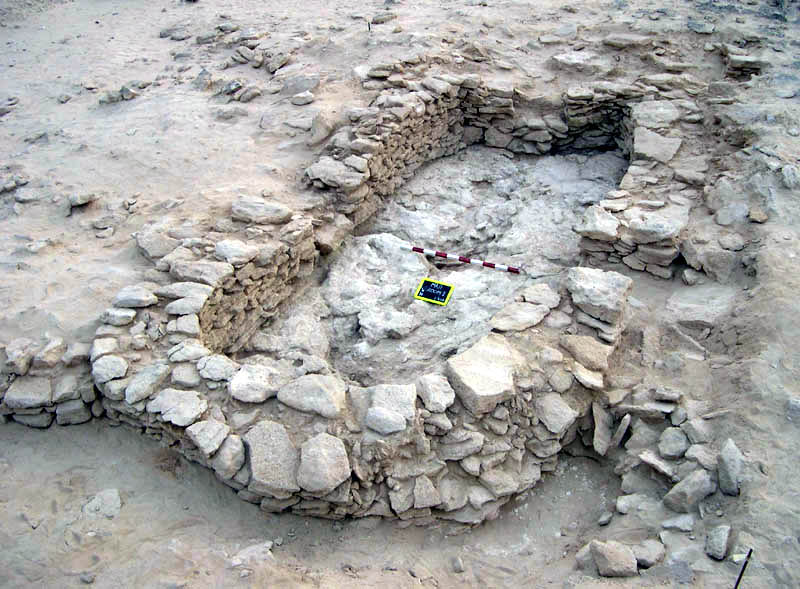
7000 year-old house at site MR11 on Marawah island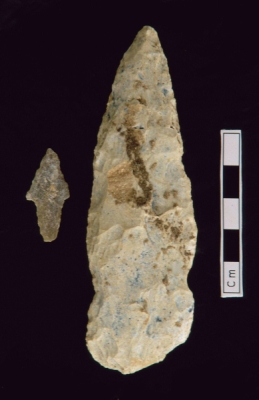
7000 year-old flint spear and arrowhead from site MR11 on Marawah island
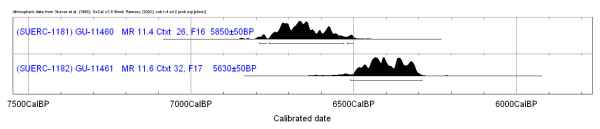
The results of the two radiocarbon dates from site MR11 on Marawah island
16 February 2004
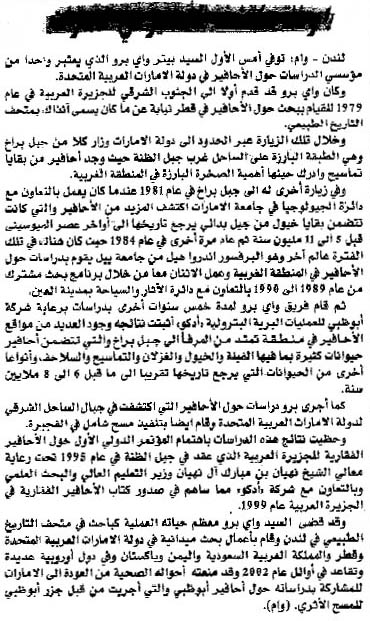
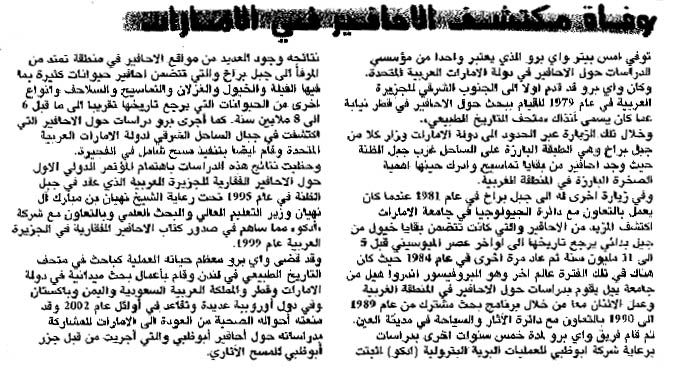
Discoverer of Abu Dhabi's fossils dies (Source: Emirates News Agency - WAM)
18 February 2004
Obituaries which appeared in the United Arab Emirates Arab Press: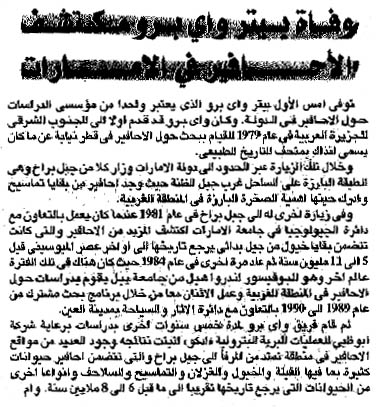
Al Bayan

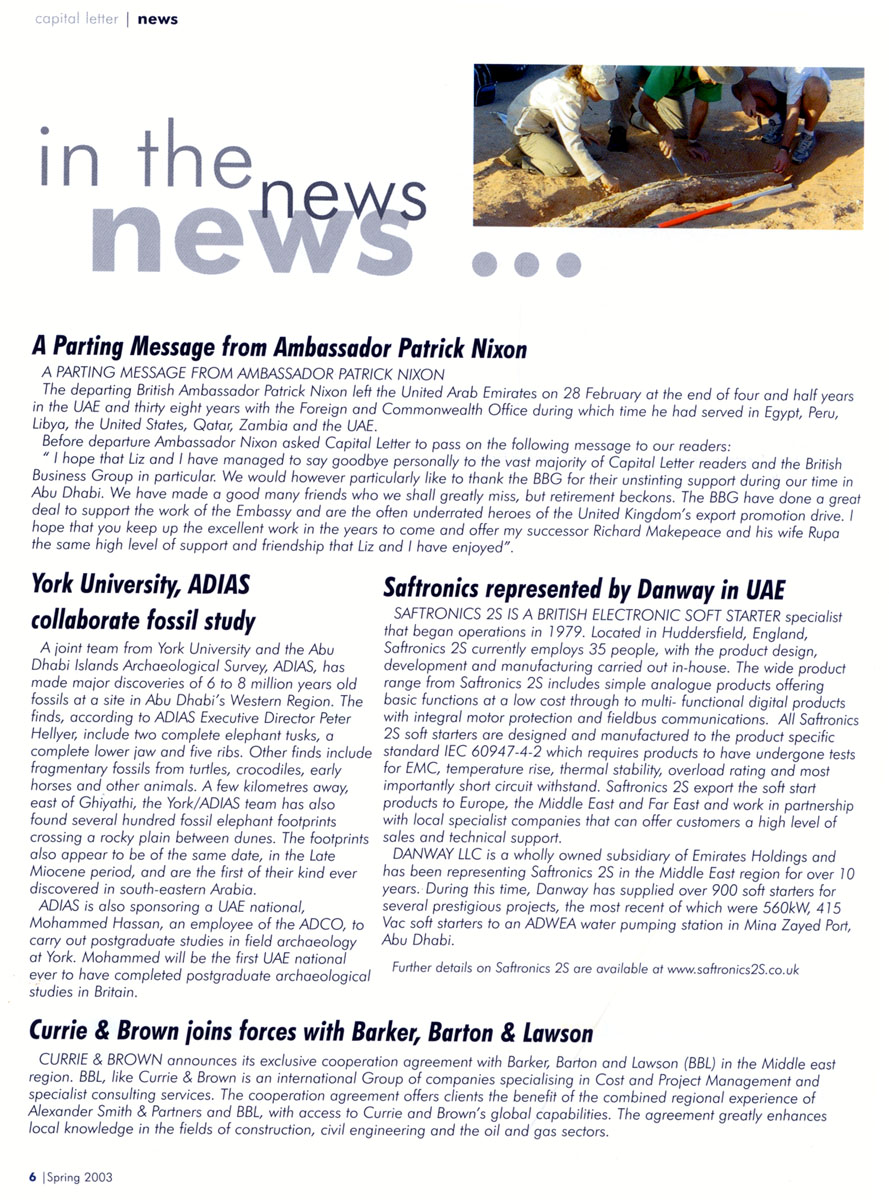


18 February 2004
Peter Whybrow, the discoverer of Arabian fossils (Source: Gulf Times - Qatar).
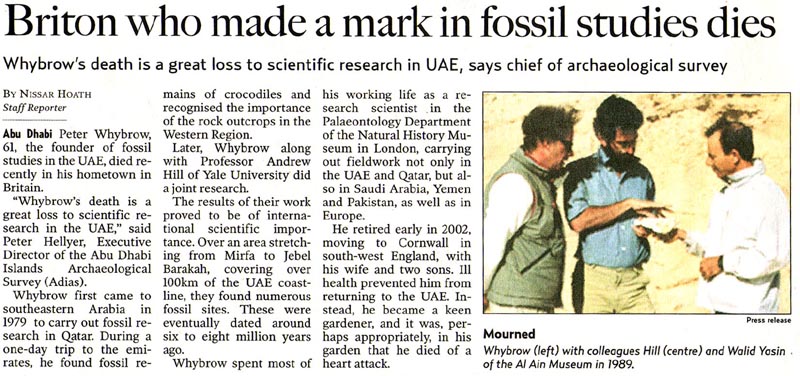
20 February 2004
Briton who made a mark in fossil studies dies (Source: Gulf News).
22 February 2004
Abu Dhabi to hold exhibition of fossil finds (Source: Gulf News).
9 April 2004
Archaeological digs `boost knowledge' (Source: Khaleej Times)
1 May 2004
Elephant fossils to be displayed (Source: Khaleej Times)
22 May 2004
6-8 million year old fossils to go on display (Source: Emirates News Agency - WAM)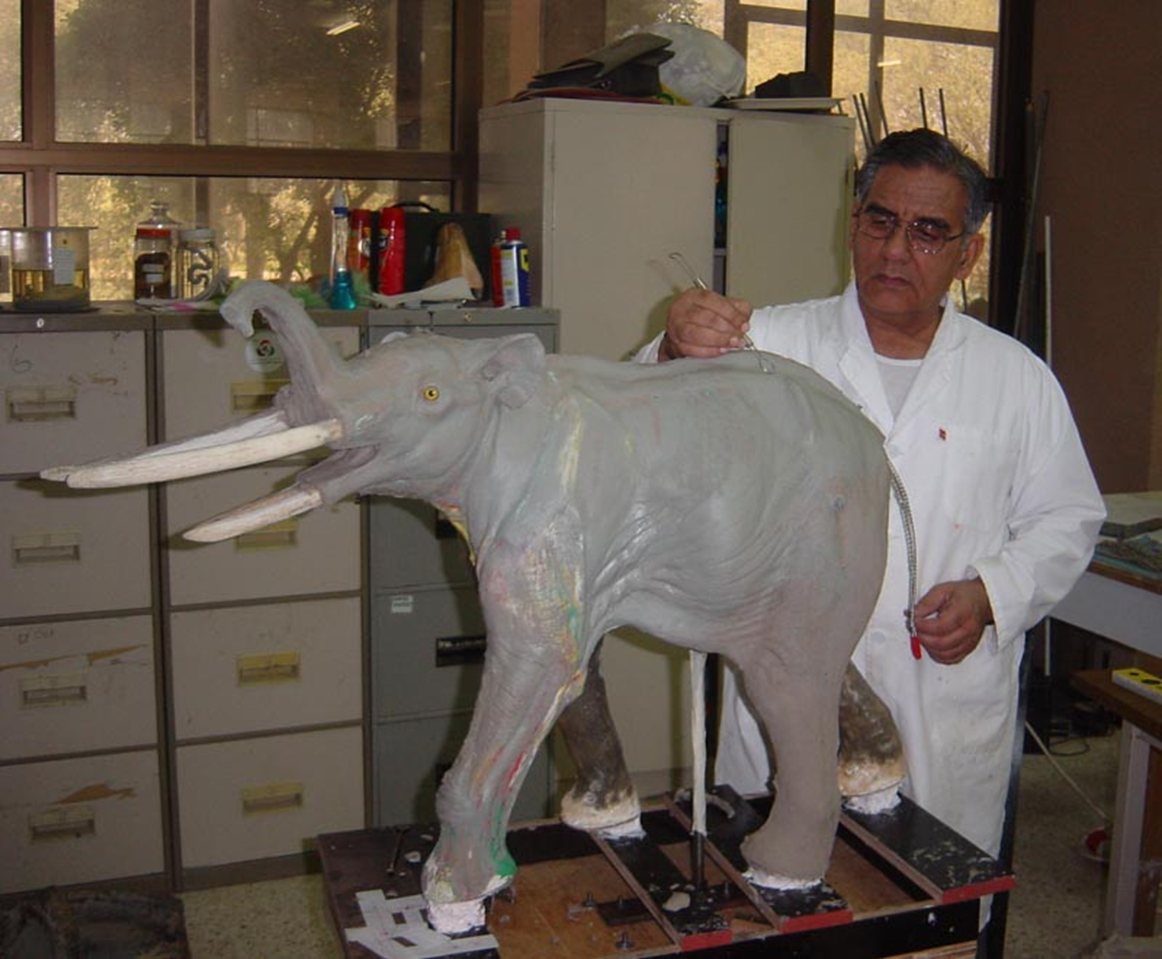
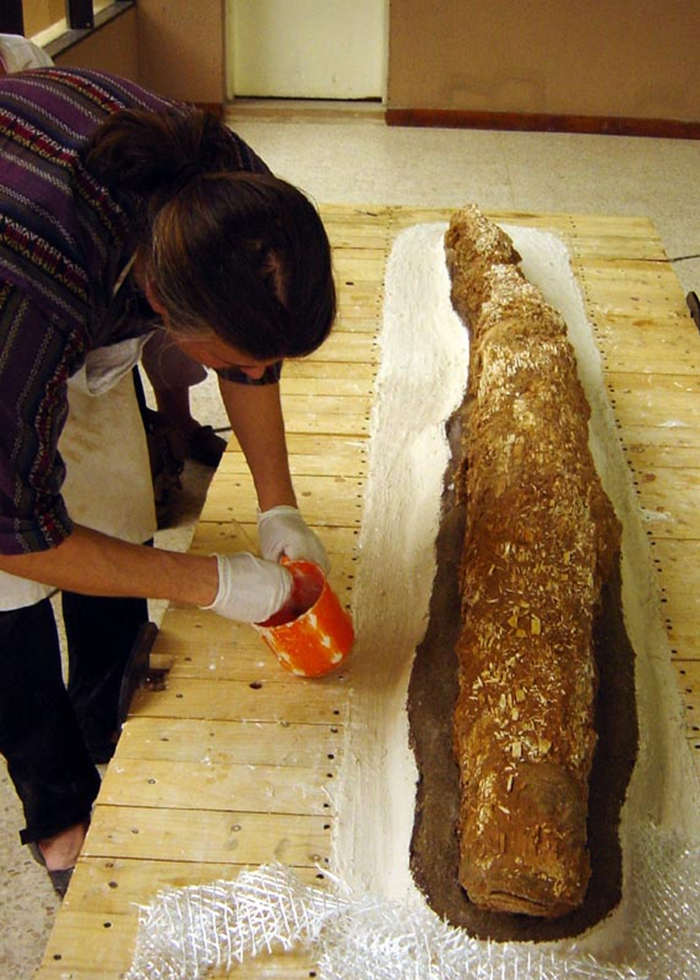
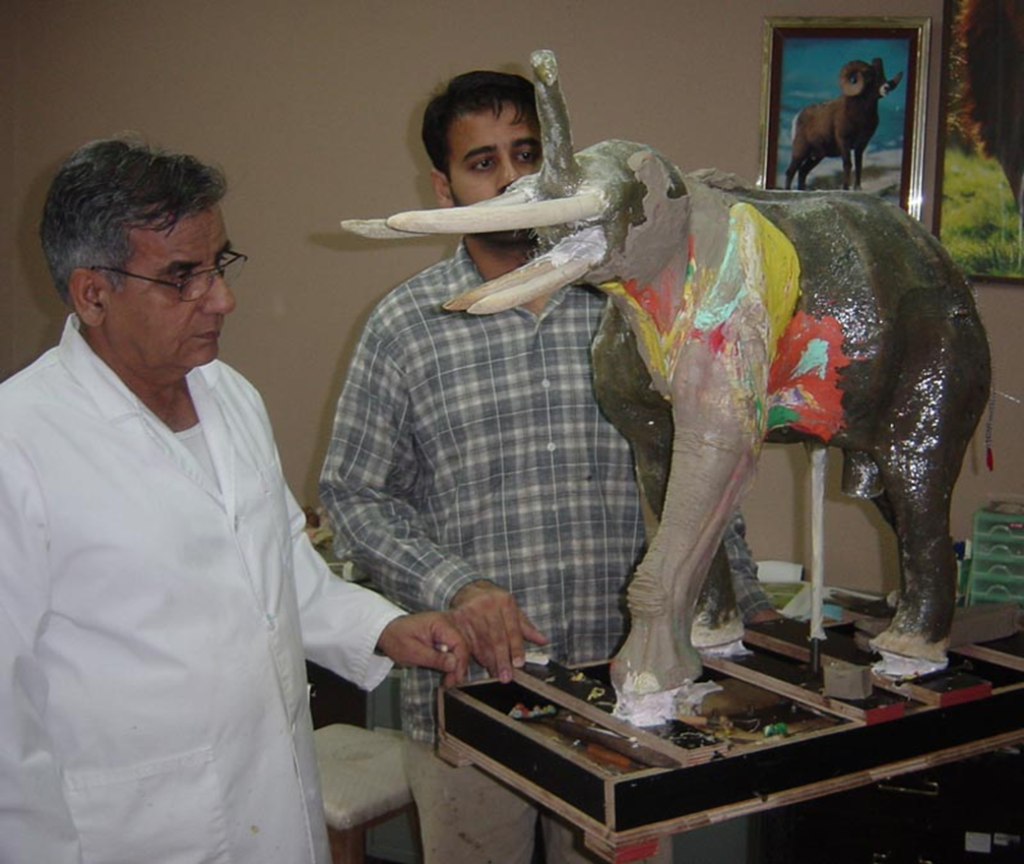
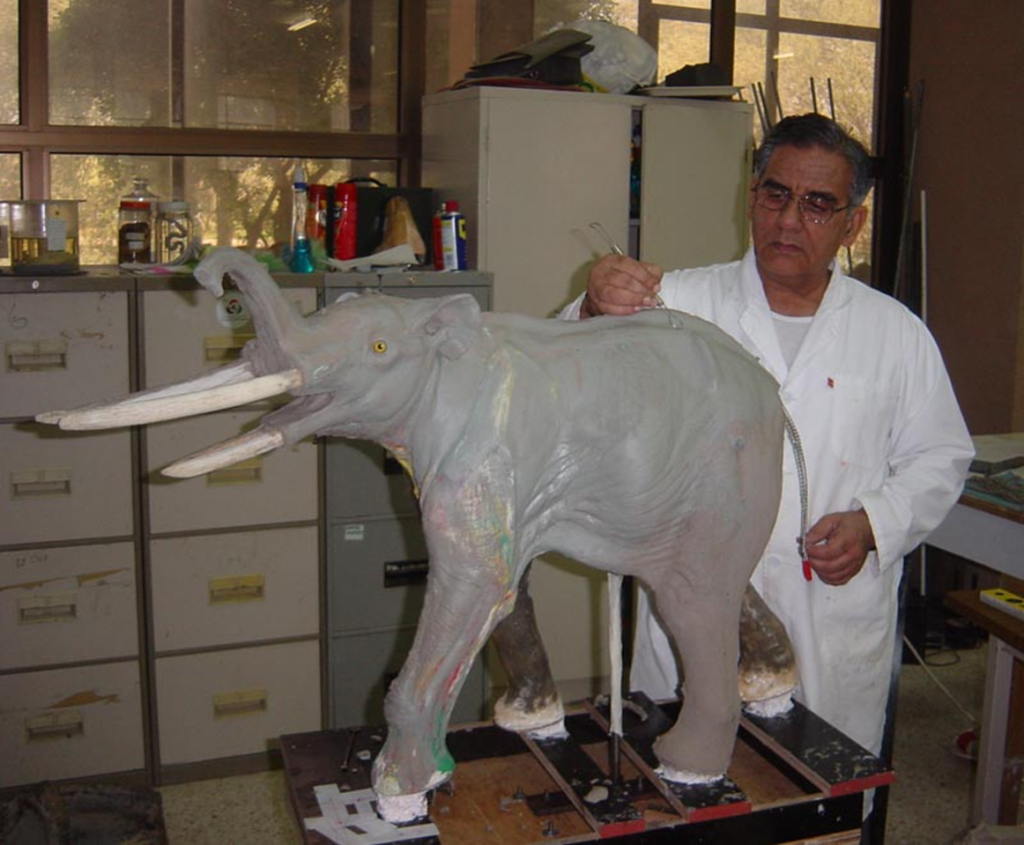
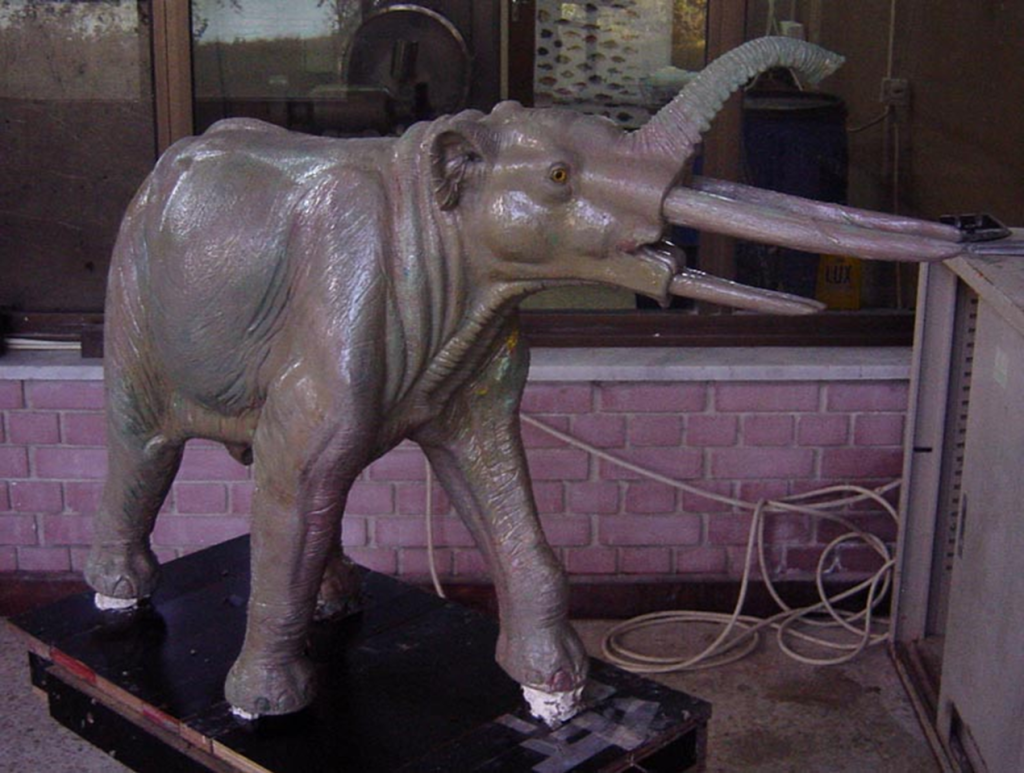
Abdul Hafeez from the Private Department of His Highness Sheikh Zayed Bin Sultan Al Nahyan works on the scale model (1:20) of a Stegotetrabelodon emiratus. This is a primitive 4-tusked elephant which lived in Abu Dhabi 6-8 million years ago (Photograph: Dr Mark Beech).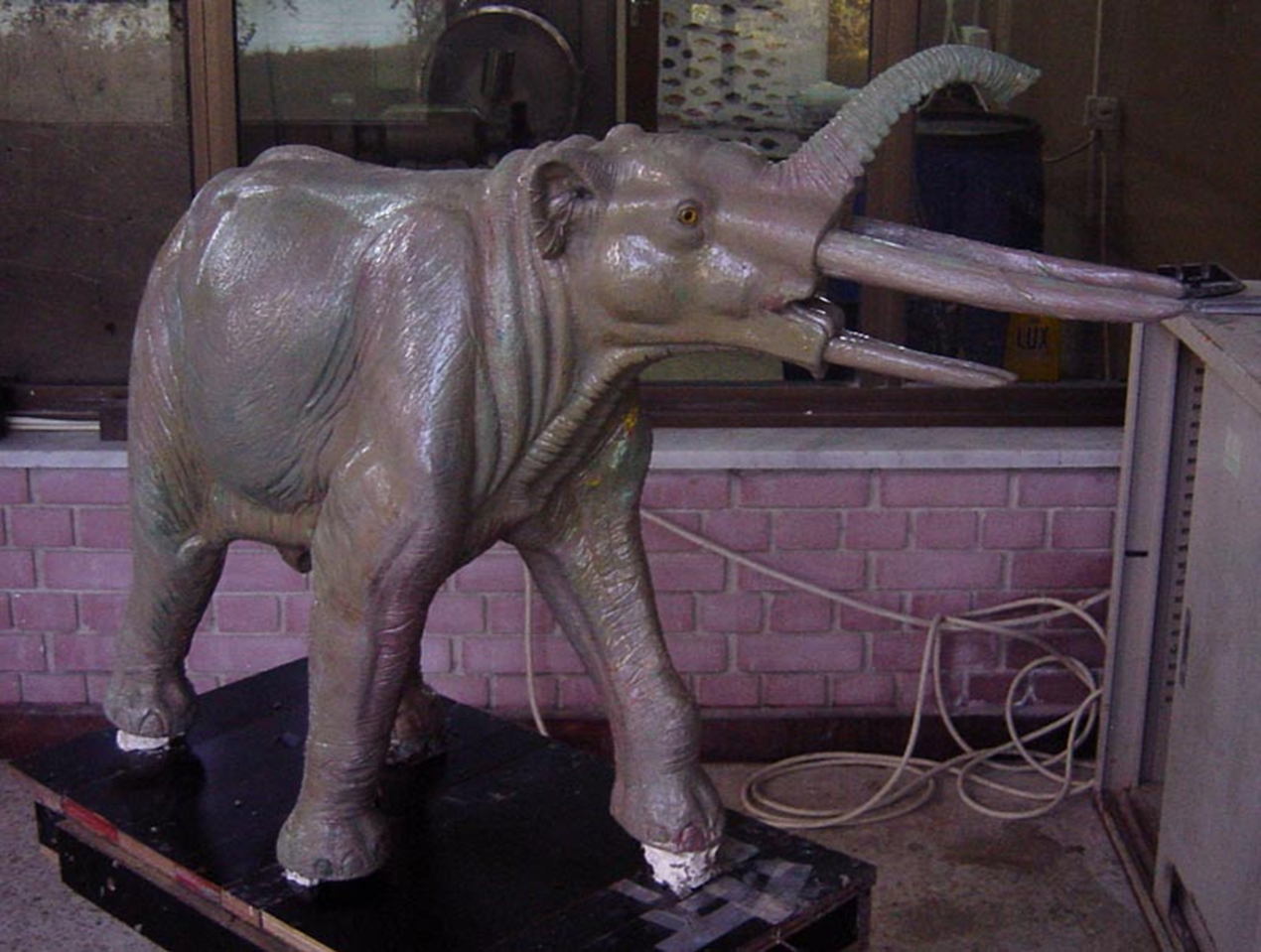
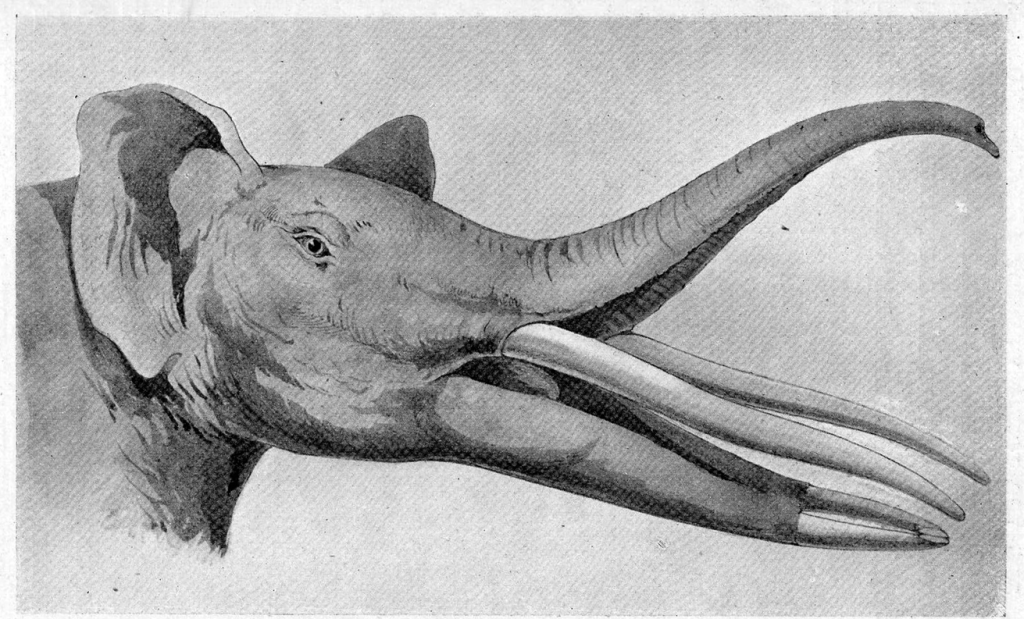
Detail of the head of the Stegotetrabelodon emiratus (Photograph: Dr Mark Beech).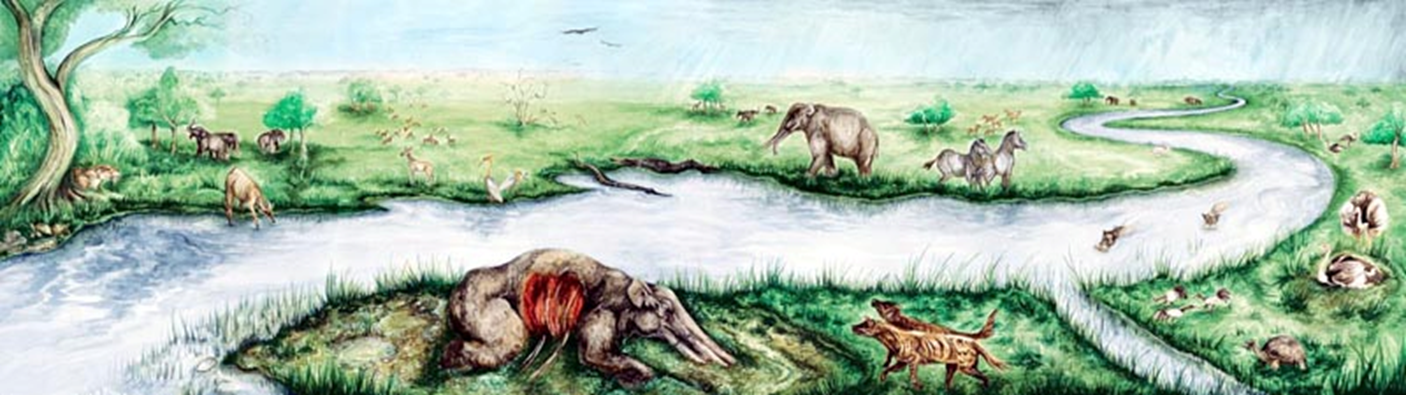
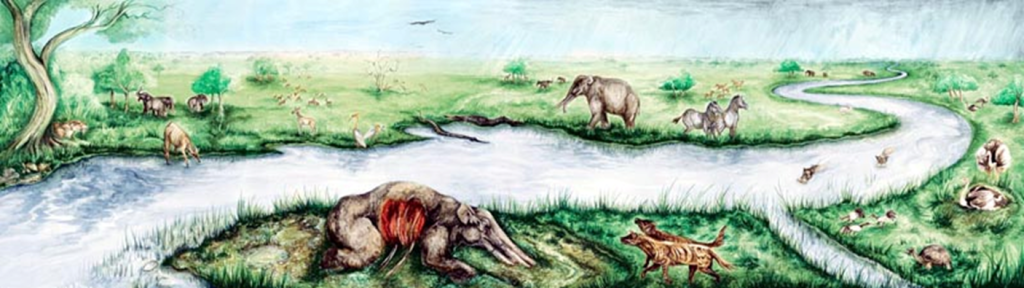
Life in Abu Dhabi 6-8 million years ago. Reconstruction painting by Gemma Goodall (Photograph: ADIAS).
The 6-8 million year old elephant tusk discovered at Ruwais. The tusk is an upper tusk from Stegotetrabelodon emiratus (Photograph: ADIAS).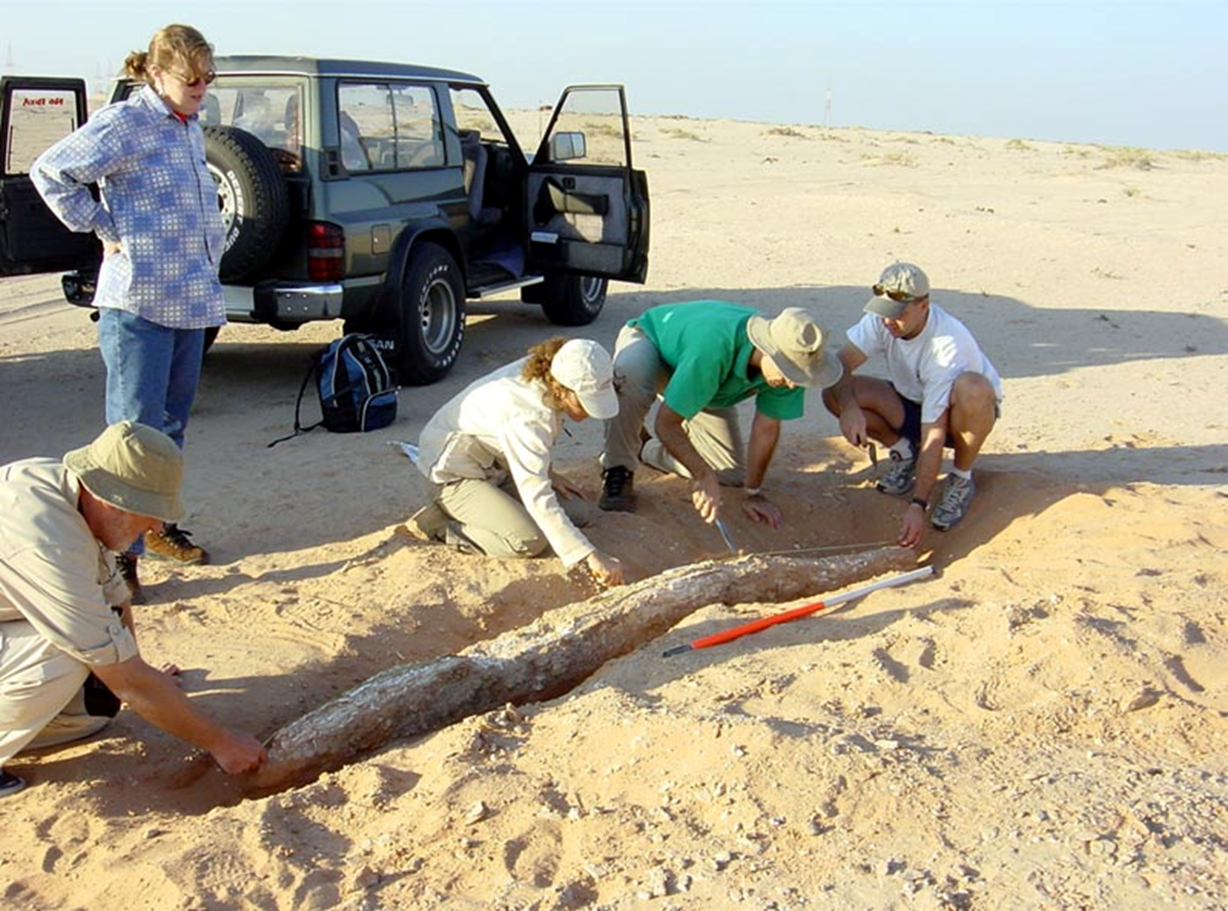
Measuring the Ruwais tusk. It is an upper tusk from Stegotetrabelodon emiratus and measures 2.54 metres in length (Photograph: Dr Mark Beech).


23 May 2004

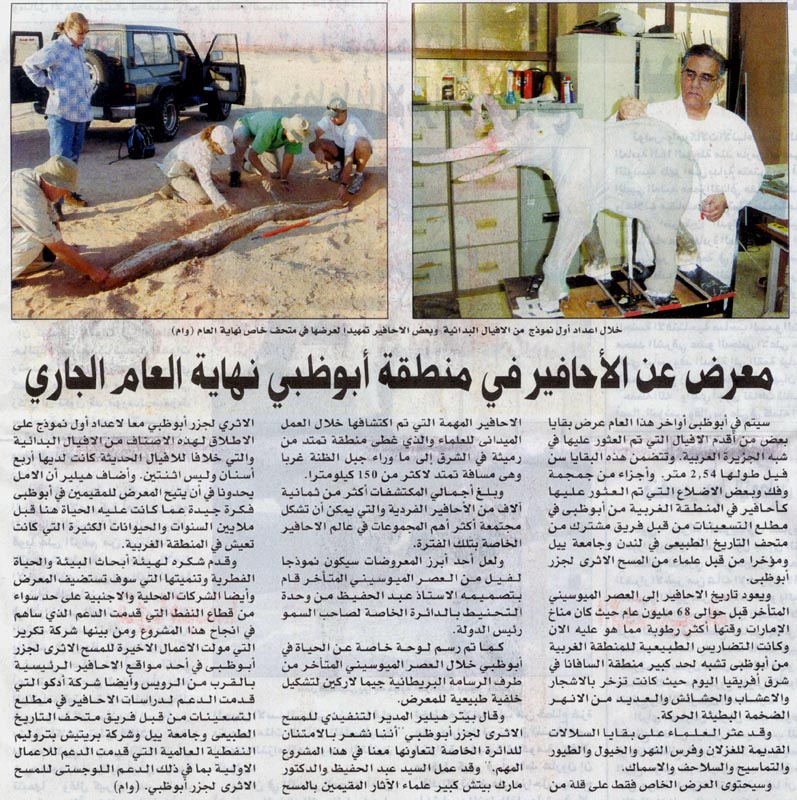
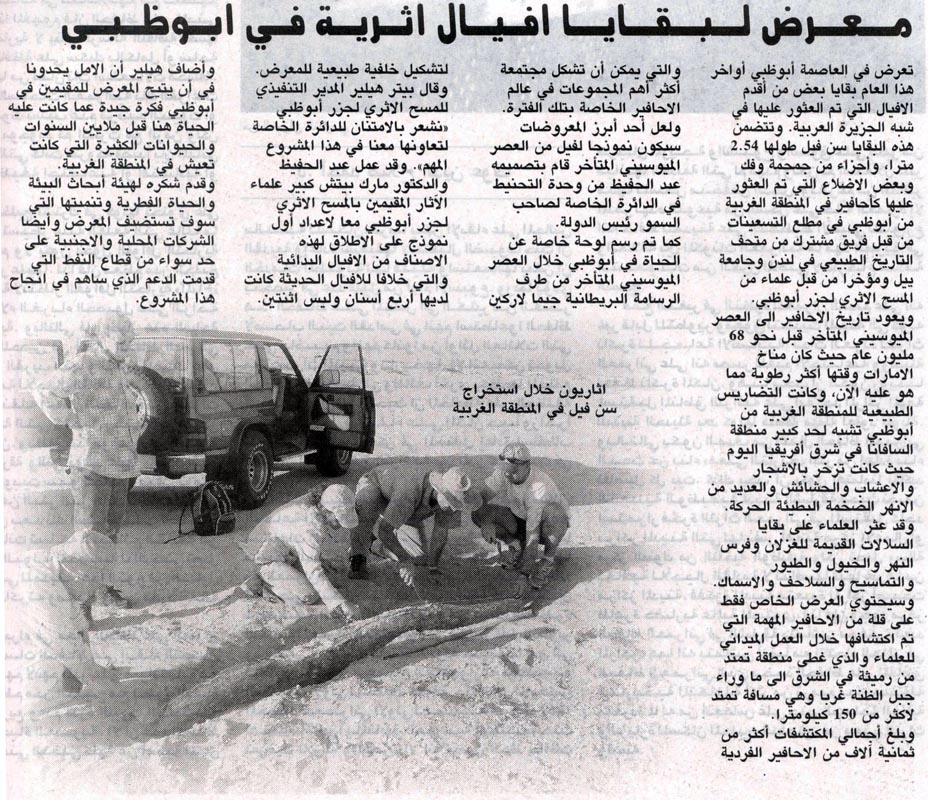
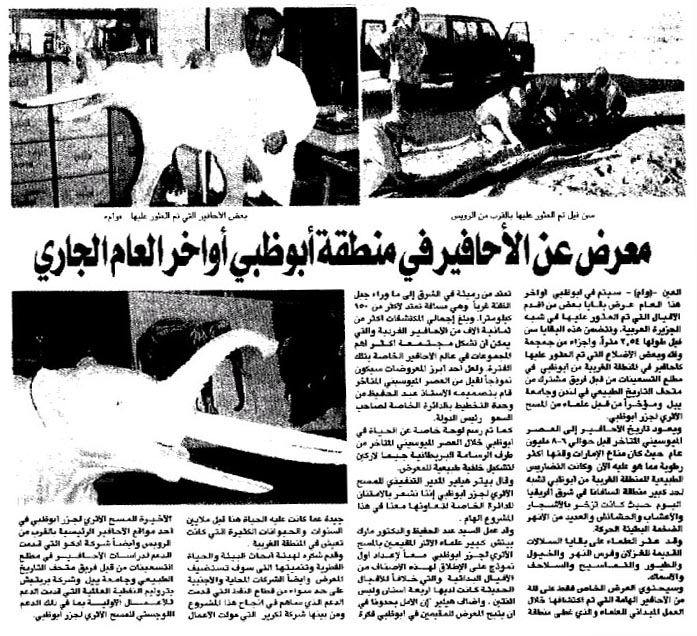
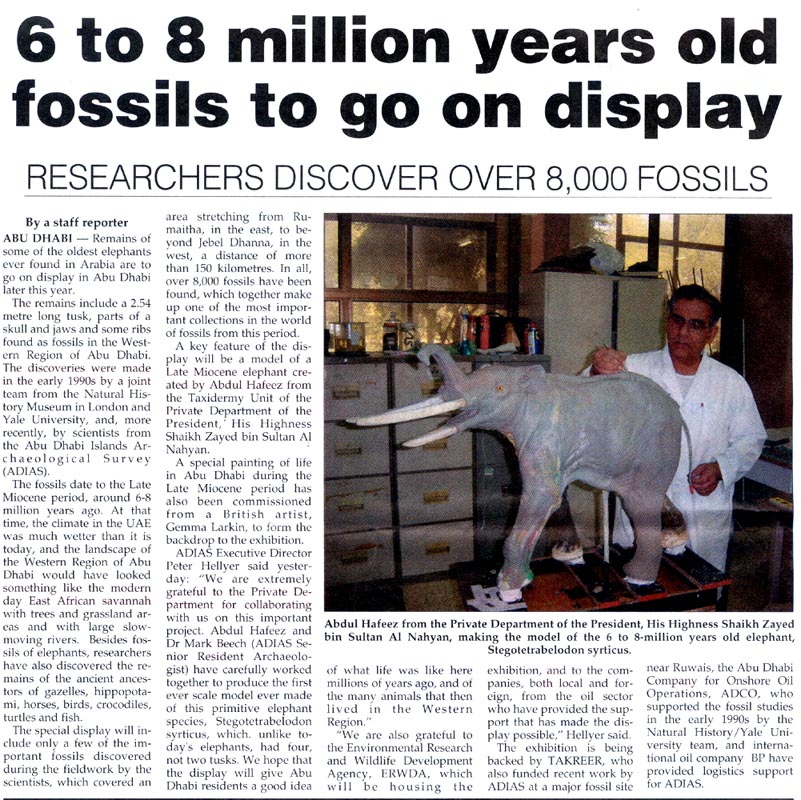
Remains of ancient tuskers on display (Source: Gulf News)
29 June 2004
Marawah excavations find Abu Dhabi's oldest inhabitant (Source: Emirates News Agency - WAM)
7500 year old house discovered at site MR11 on Marawah island (Photograph: ADIAS). 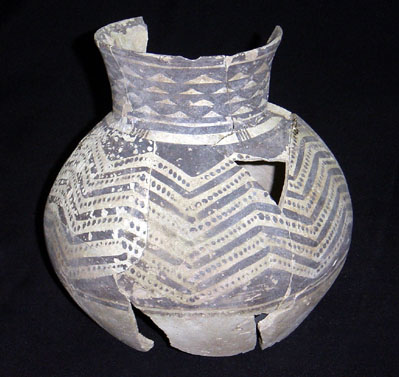
ca 7000 year old pottery vessel discovered at site MR11 on Marawah island (Photograph: ADIAS).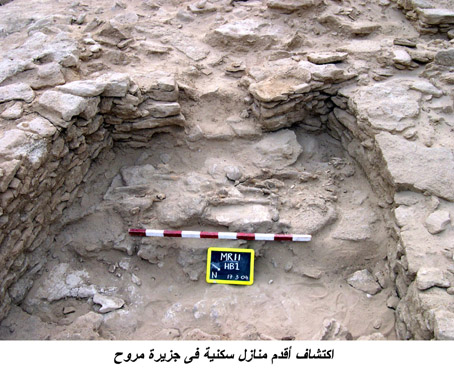
The earliest inhabitant of Abu Dhabi - The human skeleton was placed on a stone platform at the southern end of the room (Photograph: ADIAS). 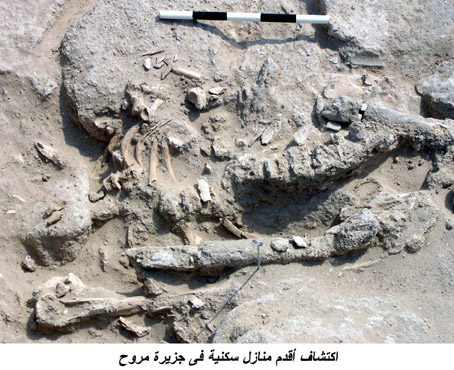
The earliest inhabitant of Abu Dhabi - Close-up detail of the human skeleton (Photograph: ADIAS).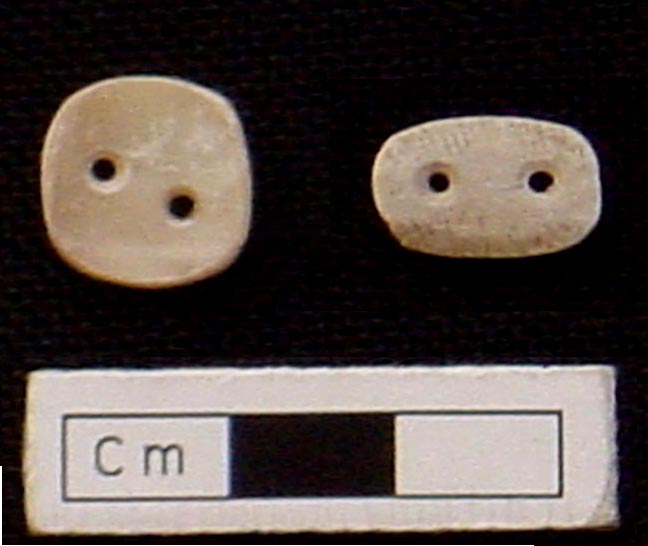
7500 year old buttons made from pearl oyster (Photograph: ADIAS).


30 June 2004
Excavations unearth oldest inhabitant of Abu Dhabi (Source: Gulf News)
Remains of oldest inhabitant of Abu Dhabi found (Source: Khaleej Times)
Abu Dhabi: Skelett in 7000 Jahre alter Siedlung entdeckt (Source: der Standard)
19 July 2004
De Cardi to be honoured (Source: Gulf News)
UAE archaeology in the spotlight at London seminar (Source: Gulf News)
24 July 2004
Book traces history of date palm (Source: Gulf News)
New book explores various aspects of bride of orchard (Source: Khaleej Times)
14 September 2004
ADIAS PRESS RELEASE:
ADIAS to help in Clean-Up Arabia
Divers and other volunteers taking part in the Clean-Up Arabia 2004 campaign this Friday are to receive a special briefing on how to recognise underwater archaeological sites and material. The Abu Dhabi Islands Archaeological Survey, ADIAS, is collaborating with the Environmental Research and Wildlife Development Agency, ERWDA, to ensure that those taking part in the clean-up of the beach and inshore areas at Abu Dhabi's port of Mirfa are given information on how to recognise sites and material, and what to do if they find them. The ADIAS Senior Resident Archaeologist, Dr. Mark Beech, will be taking part in the Mirfa clean-up. He will provide the divers and other volunteers with an outline of archaeological material that may be present below the high tide mark, including that to be found in shallow inshore waters. He will also identify any material that might be collected. Mirfa has been an important port for coastal fishermen for generations, and items that may occur include broken pieces of pottery and stone anchors, once used by fishing boats."The coastal inhabitants of Abu Dhabi have made their living from the sea for at least 7,000 years," according to Peter Hellyer, the ADIAS Executive Director. "Many archaeological sites have been found on the coast and islands. In some areas, such as on the island of Marawah, sites and pottery have been found on the shores, below the high tide mark, and there may be others in shallow inshore waters. By taking part in this clean-up campaign, we hope to inform divers and others how to recognise and record these aspects of the country's cultural heritage."Clean-Up Arabia 2004 is jointly organised by the Emirates Diving Association (EDA) and ERWDA, in association with the United Nations Environment Programme Regional Office of West Asia / UNEP - ROWA. The event is backed by both the Australian 'Clean Up the World' campaign and the USA based 'International Coastal Cleanup' and PADI PROJECT A.W.A.R.E. The objective is to clean rubbish from the beaches and from inshore sites popular with local divers.
15 September 2004
ADIAS to help Clean-Up Arabia (Source: Emirates News Agency - WAM)
16 September
Clean Up Arabia drive is all set for kick-off (Source: Khaleej Times)
19 September 2004
Abu Dhabi divers plumb depths to remove trash (Source: Khaleej Times)
11 October 2004
ADIAS PRESS RELEASE:
BP helps studies of UAE heritage
Studies of the geology and archaeology of the United Arab Emirates are being helped by international oil company BP, it is announced today.The help is in the form of assistance for the Abu Dhabi Islands Archaeological Survey, ADIAS, in its research into two distinct aspects of Abu Dhabi's heritage - research into the geology of the island of Balghelam, north-east of Abu Dhabi, and a study programme on Neolithic (Late Stone Age) flint tools from the western island of Dalma.Archaeological excavations on Balghelam, carried out with the permission of the island's owner, Presidential Court Chamberlain Sheikh Surour bin Mohammed Al Nahyan, have shown that the island was occupied as much as four thousand years ago, perhaps by traders passing down the Gulf from Bahrain. Balghelam is close inshore, but, like many of Abu Dhabi's islands, is divided from the mainland by a shallow channel.Earlier this year, two geologists undertaking research for ADIAS collected rock samples from the island, which are now to be dated at Britain's Southampton University. This will help scientists to date the evolution of the shorelines of the islands and of nearby coastal areas of Abu Dhabi over the past few thousand years, adding valuable data to knowledge of the pattern of human settlement in the area. The results from the analysis of the rock samples will be included in a publication being prepared by ADIAS on the archaeology of Balghelam.Other excavations by ADIAS on the western island of Dalma have identified one of the earliest human settlements known in the United Arab Emirates. It was occupied between 6500 - 7500 years ago, or the Neolithic period.The inhabitants of the Dalma site were trading by sea with Mesopotamia (present-day Iraq), and depended for their food on shellfish, fish, turtles and dugongs, as well as on domestic animals like sheep and goats. In their hunting and fishing, and in processing their food, they depended on flint (stone) tools, and several thousand tools and other flint fragments have been recovered from the site.ADIAS is now preparing a major publication on the Dalma site, which will include cataloguing and analysis of the stone tools. This work is being carried out by ADIAS associate, Dr Heiko Kallweit, a leading expert on Arabian stone tools from the Neolithic period, who is based in Freiburg, Germany.BP are helping ADIAS carry out these two important pieces of research by arranging for the shipping of the rock samples to Britain and the Neolithic stone tools to Germany."We are delighted to be able to help ADIAS with their research," says David Dalton, General Manager of BP Abu Dhabi. "BP has a history of nearly 70 years of involvement with Abu Dhabi, and has supported scientific research here for decades. Bodies like ADIAS are making important contributions to knowledge of the geology and heritage of the United Arab Emirates, and BP is pleased to be able to support their efforts."
11 October 2004
BP helps studies of UAE heritage (Source: Emirates News Agency - WAM)
7 November 2004
Zayed’s interest in heritage praised (Source: Khaleej Times)
20 December 2004
Remains of 7,500-year-old man found (Source: Khaleej Times)
Remains of 7,500-yr old man found in UAE (Source: The Daily Star, Bangladesh)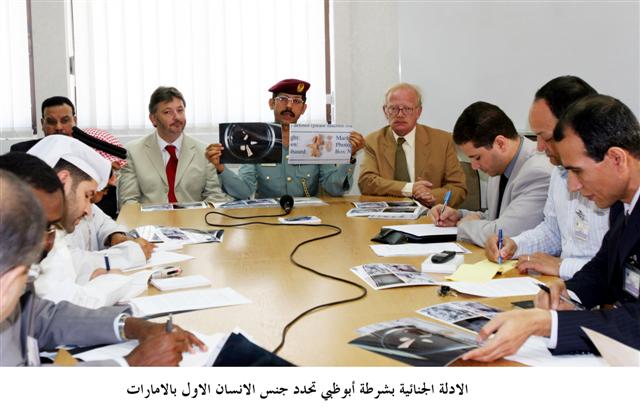
Seated from left to right at the end of the table: Dr Saeid M.E. Shawgi (Head of Forensic Pathology Unit, General Directorate of Abu Dhabi Police), Dr Mark Beech (Senior Resident Archaeologist, Abu Dhabi Islands Archaeological Survey, ADIAS), Lt. Col. Ahmad Hassan Al-Awadhi (Director of the Forensic Science Laboratory, General Directorate of Abu Dhabi Police), Peter Hellyer (Executive Director, Abu Dhabi Islands Archaeological Survey, ADIAS)
ADIAS held a press conference together with the Forensic Science Laboratory at Abu Dhabi Police Headquarters in Abu Dhabi from 10-11.30 a.m. The following press release was issued: Forensic Science Laboratory of Abu Dhabi Police identifies the gender (Source: WAM, Emirates Press Agency)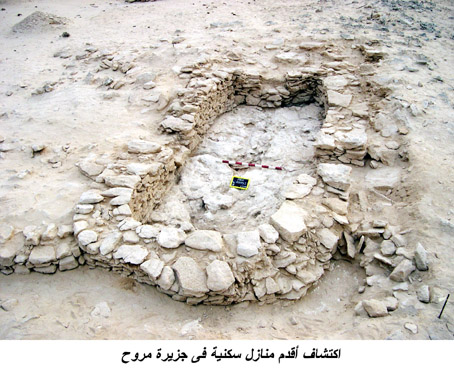
7500 year old house discovered at site MR11 on Marawah island (Photograph: ADIAS). 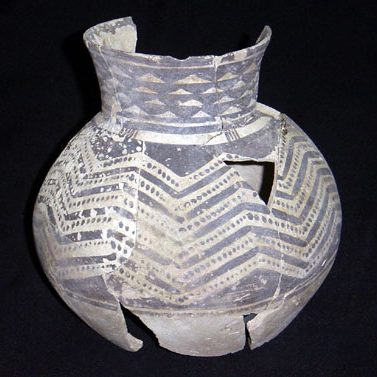
ca 7000 year old pottery vessel discovered at site MR11 on Marawah island (Photograph: ADIAS).
The earliest inhabitant of Abu Dhabi - The human skeleton was placed on a stone platform at the southern end of the room (Photograph: ADIAS).
The earliest inhabitant of Abu Dhabi - Close-up detail of the human skeleton (Photograph: ADIAS).

21 December 2004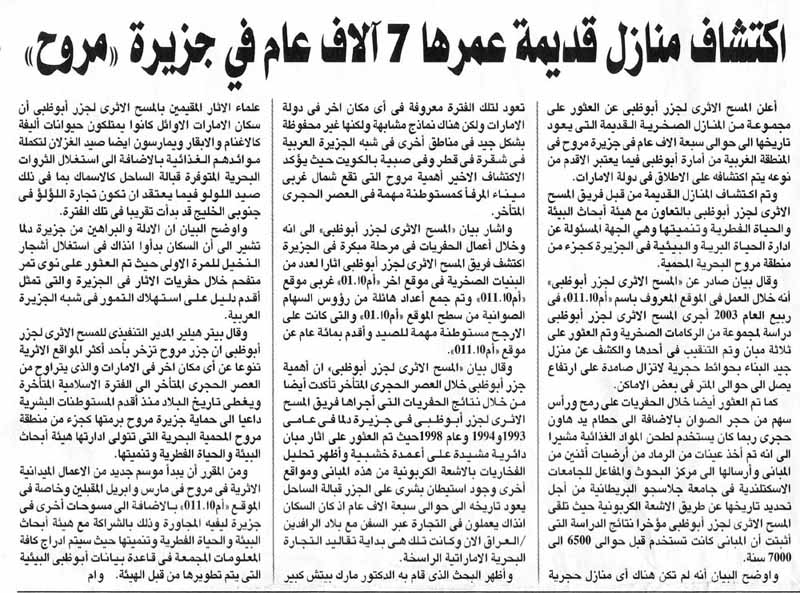
UAE's oldest skeleton found - in arabic (Source: Al Bayan)
(Source: Al Khaleej)
Scientists recover DNA from skeleton (Source: Khaleej Times)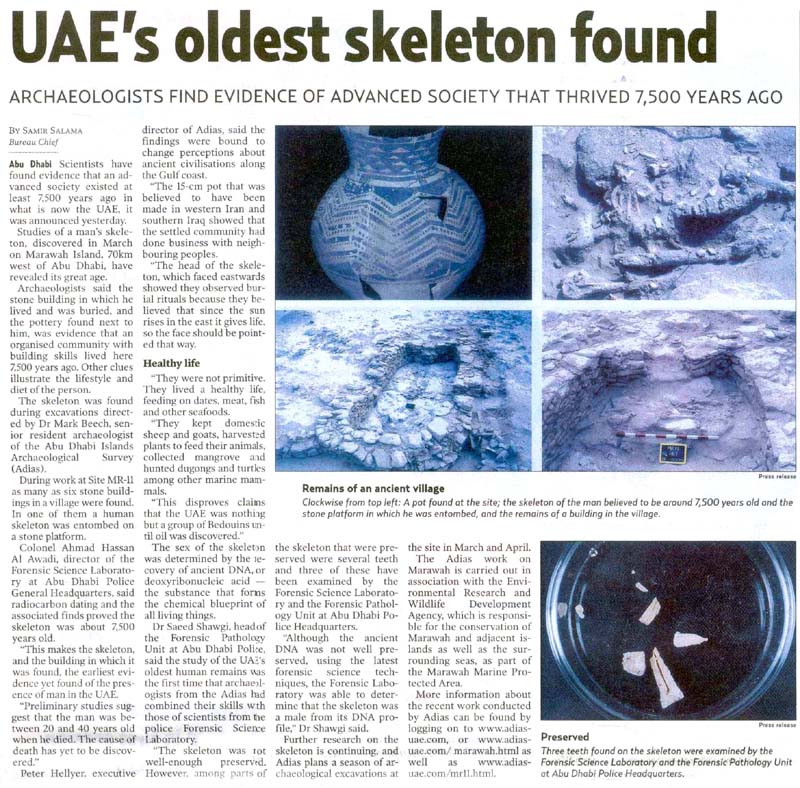
UAE's oldest skeleton found (Source: Gulf News)
Remains of 7,500-year-old man found in UAE (Source: ABC Online, Australia)
UAE archaeologists find 7,500-yr-old skeleton (Source: Hindustan Times, India)
22 December 2004
Remains of 7,500-year-old man found in UAE (Source: StonePages.com - Archaeo News)
2005
16 January 2005
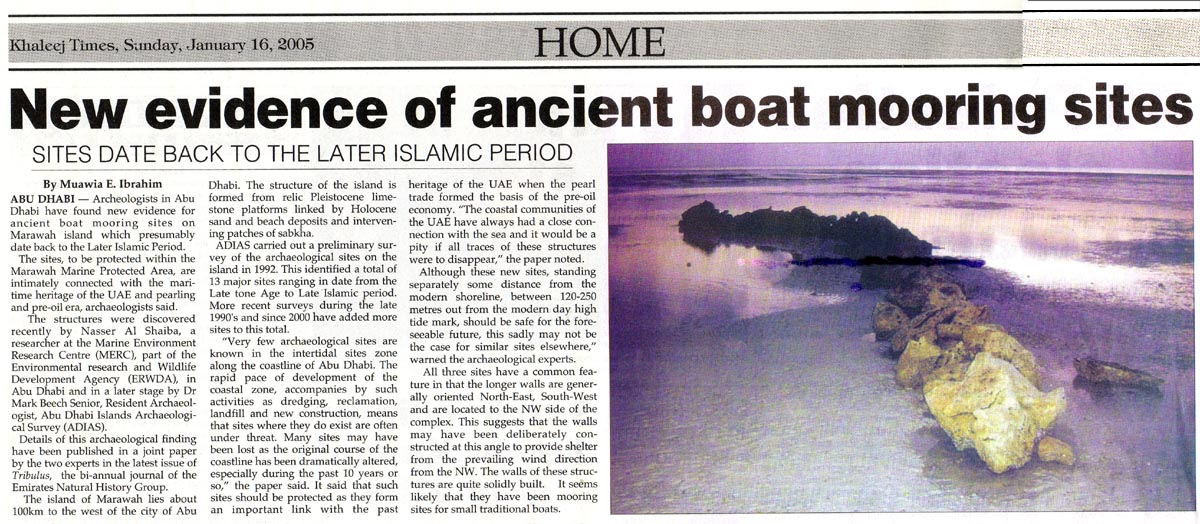
New evidence of ancient boat mooring sites [ download jpeg version] (Source: Khaleej Times)
30 January 2005
Book on Jebel Hafit released (Source: WAM Emirates News Agency)
A major new scientific study of Jebel Hafit, Abu Dhabi's only mountain, is released today.
The 220 page book, which is lavishly illustrated with colour photographs, is entitled: "Jebel Hafit – a Natural History" and provides a detailed introduction to the geology, archaeology and natural history of the mountain, just south of Al Ain.
The chapter on archaeology, by ADIAS Associate Dr. Robert Carter and Dr. Walid Yasin al-Tikriti, of the Department of Antiquities and Tourism in Abu Dhabi's Eastern Region, is the first extensive overview of the archaeology of the mountain to have been published for many years.
Published by the Emirates Natural History Group, ENHG, with support from the Abu Dhabi Company for Onshore Oil Operations, ADCO, the book is edited by Simon Aspinall and Peter Hellyer, two leading experts on the country's environment and heritage. It contains ten separate chapters, along with a lengthy introduction detailing the history of scientific research on Jebel Hafit over the last fifty years or so, a Preface by Sheikh Sultan bin Tahnoun Al Nahyan, Under-Secretary of the Diwan of the Ruler's Representative in the Eastern Region, and a Foreword by the former ADCO General Manager, Mr. Andre van Strijp.
Contributors include top experts on the country's geology, archaeology, birds, mammals, insects, plants and other topics.
The book shows that Jebel Hafit, which rises to just over 1000 metres above sea level, is one of the most important places in the United Arab Emirates in terms of the diversity of its plants and wildlife, as well as being a key site in terms of the country's archaeological heritage. It is currently being evaluated by the Environmental Research and Wildlife Development Agency, ERWDA, for nomination as a nature reserve or protected area, and the scientific data contained in the book will help to support arguments for its protection.
In his Preface, Sheikh Sultan bin Tahnoun wrote that: "The mountain of Jebel Hafit looms large over Al Ain, and is an ever-present reminder of the forces of nature and of our own relative insignificance in the grand scheme of things... I am delighted to see this impressive publication on its natural history."
"The Abu Dhabi Company for Onshore Oil Operations, ADCO, which supported its publication, and the long-running efforts of the Emirates Natural History Group, ENHG, deserve our special appreciation," he said.
In his Foreword, the former ADCO General Manager noted: "Only a few of us realise the richness of the UAE's biological and historical diversity ... This book makes a major contribution to our knowledge of the country."
He noted that the new publication grew out of support provided several years ago to the ENHG for a study of Jebel Hafit. The initial report was produced in 1998, but work has continued over the last six years, with much new information being gathered.
"We are proud that ADCO has been able to make another contribution towards the growing wealth of literature concerning the environment of the UAE," Van Strijp said.
The book's lead editor, Simon Aspinall, said that the Emirates Natural History Group was extremely grateful to ADCO for its support.
"The Group has received support over many years from ADCO, which has always shown itself to be a Company which takes its responsibilities for protecting the country's environment and heritage very seriously," he said.
"Thanks to ADCO, we have now been able to produce the first exhaustive study of one of the country's landmarks. No other single place in the UAE has been given such detailed attention. We look forward to further collaboration with ADCO in the years ahead."

31 January 2005
Book on Jebel Hafit released (Source: Gulf News)
3 February 2005
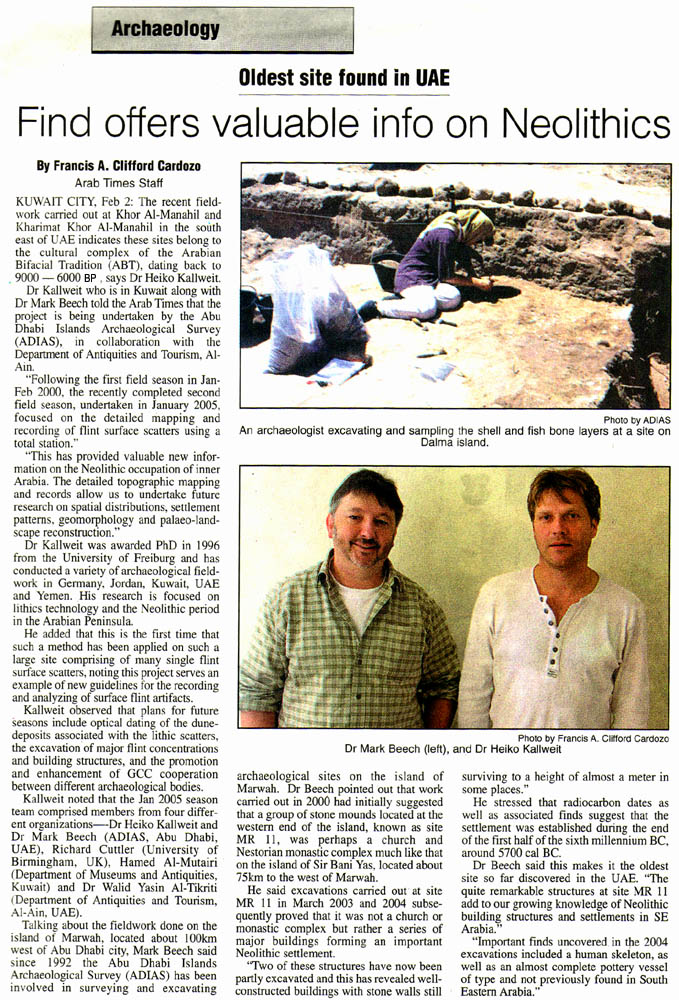
Finds offer valuable info on Neolithic (Source: Arab Times)
Ancient human skeletons, pots found in Abu Dhabi islands (Source: Kuwait Times)
8 February 2005
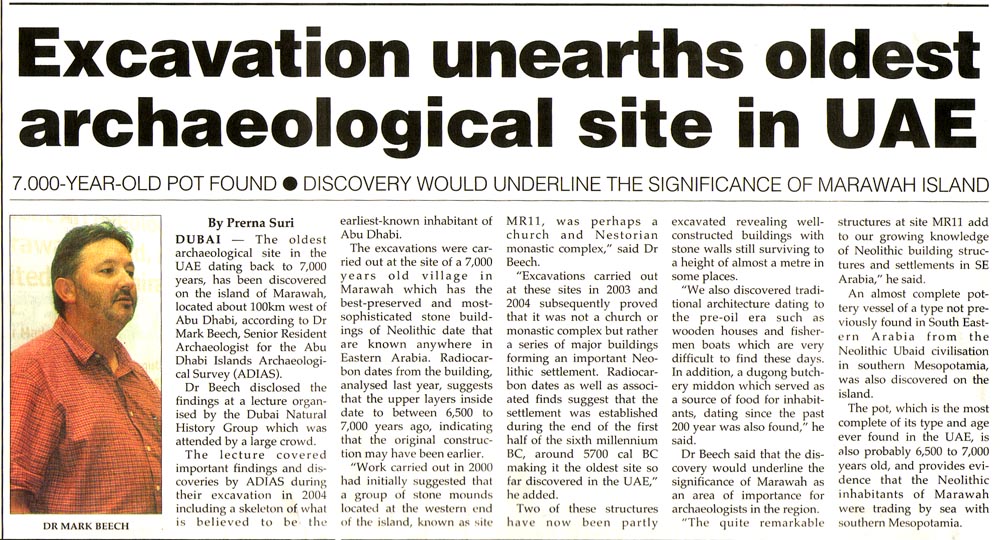
Excavation unearths oldest archaeological site in UAE (Source: Khaleej Times)
20 February 2005
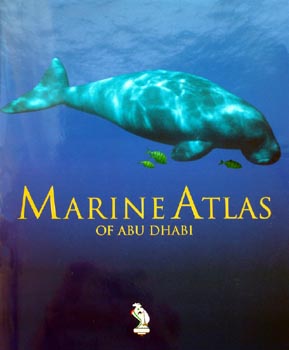
Photograph taken at the press conference to launch the Marine Atlas of Abu Dhabi (From left to right: Ron Loughland, Peter Hellyer, Prof. Francois Blasco, Dr David George, Dr David John, Dr Mark Beech, Dr Jeffrey Miller, Dr Tony Preen and Simon Aspinall). A press conference was held in the Intercontinental Hotel in Abu Dhabi from 8 to 9.30 p.m., organised by the Emirates Heritage Club. This was to launch the new "Marine Atlas of Abu Dhabi", which features three chapters authored or co-authored by ADIAS staff: "Important Marine Areas for Birds in Abu Dhabi Emirate" by Simon Aspinall, Ron Loughland, A.H. Al Ali and S.A. Wrdyani; "The Fish Fauna of Abu Dhabi Emirate" by Dr Mark Beech, and "The Archaeology of Abu Dhabi Coastal Zone" by Peter Hellyer.
21 February 2005
Emirates Heritage Club launches Marine Atlas (Source: WAM
Emirates News Agency)

24 February 2005
Restoration puts the glow back on Dalma's vintage mosques (Source: Gulf News)
12 March 2005
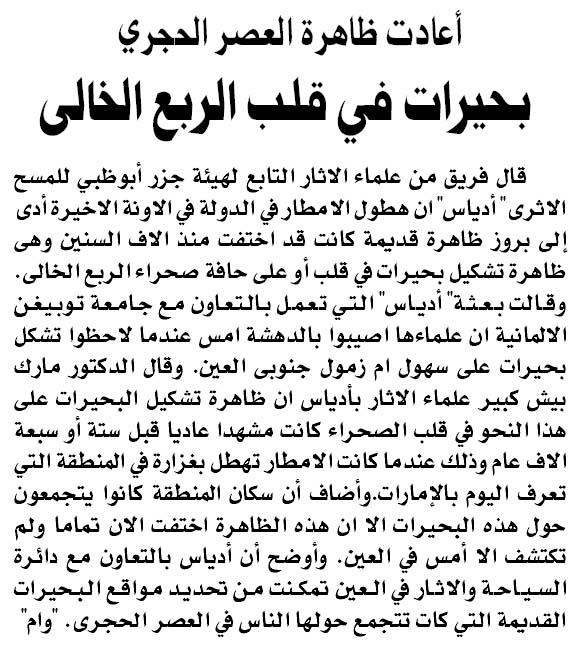
Lakes in the desert (Source: WAM Emirates News Agency)

13 March 2005
Lakes in the desert - in arabic (Source: Akhbar Al Arab)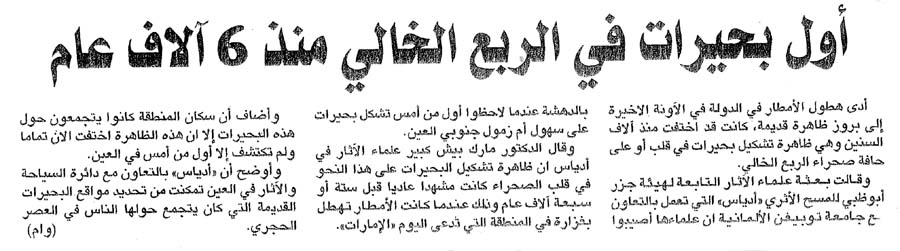
Lakes in the desert - in arabic (Source: Al Bayan)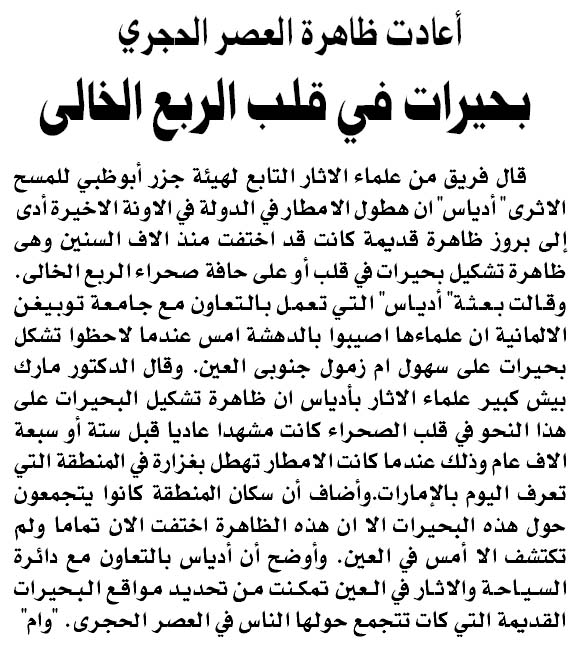
Lakes in the desert - in arabic (Source: Al Ittihad)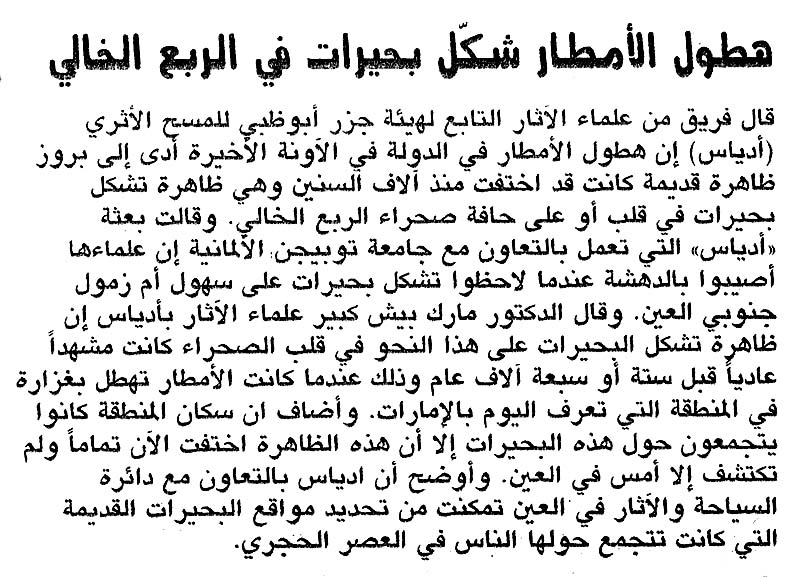
Lakes in the desert - in arabic (Source: Al Khaleej)
14 March 2005
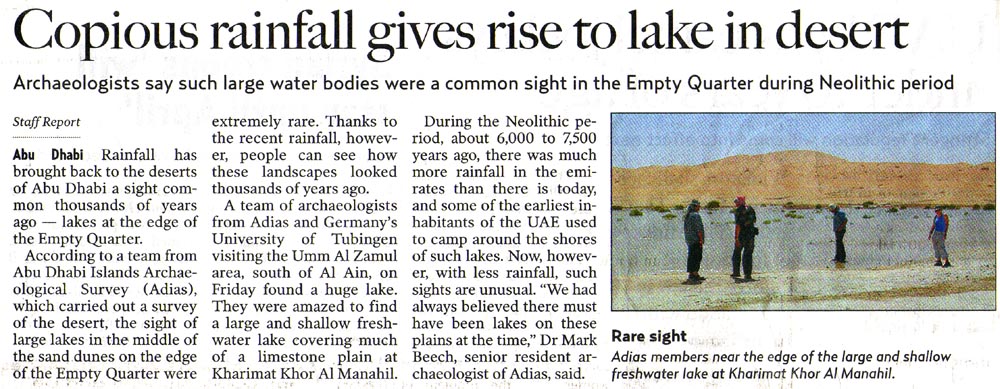
Copious rainfall gives rise to lake in desert (Source: Gulf News)
15 March 2005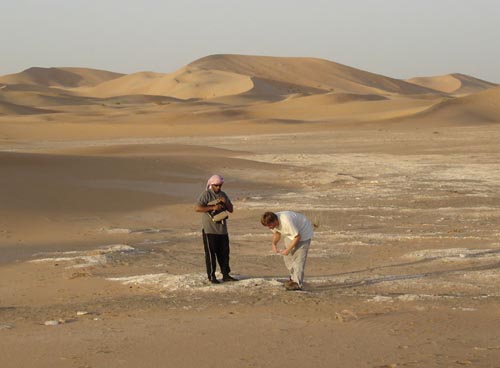
Archaeological work at Khor Al Manahil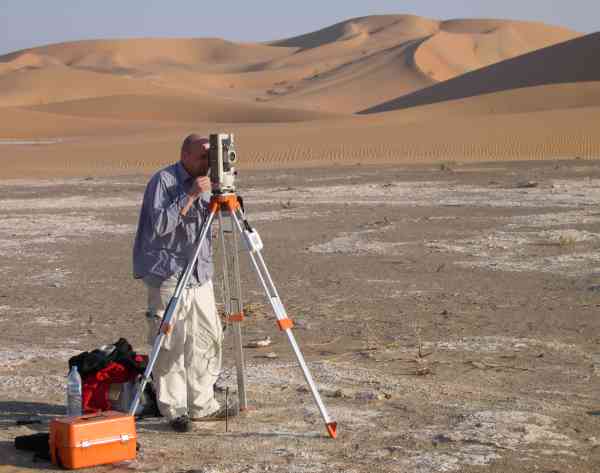
Archaeological work at Khor Al Manahil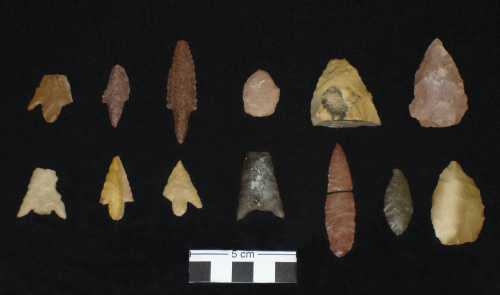
7000-year-old flint tools from Khor Al Manahil
Dolphin to support new archaeology excavations (Source: WAM Emirates News Agency)


16 March 2005
New Archaeology Excavations - Unique finds in 2004 of Tools and Houses from 7,000 years ago (Source: Dolphin Insight - Newsletter of Dolphin Energy Ltd.)
21 March 2005
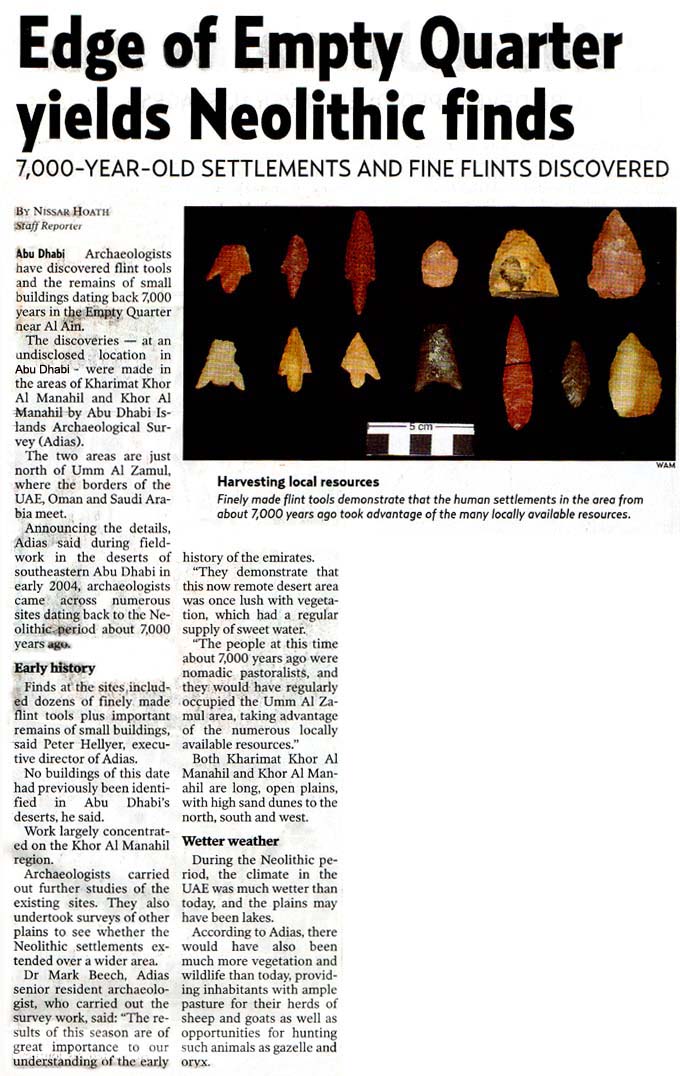
Edge of Empty Quarter yields Neolithic finds (Source: Gulf News)

1 April 2005
The hidden wonders of Jebel Hafeet revealed (Source: Gulf News)

8 April 2005
Media focus on digs sought (Source: Khaleej Times)
4 June 2005
‘Save the Dhubs’ project launched (Source: Khaleej Times)
7 June 2005
Experts debate coastal management at forum (Source: Khaleej Times)
8 June 2005
Plans to convert Al Hosn Palace into national museum (Source: Khaleej Times)
Plans to convert Al Hosn Palace into national museum (Source: WAM Emirates News Agency)
27 June 2005
Abu Dhabi plans national museum (Source: Gulf News)
14 October 2005
Khalifa issues law establishing Culture & Heritage Authority in Abu Dhabi (Source: WAM Emirates News Agency)
ABU DHABI, 14th October 2005 (WAM)-- President HH Sheikh Khalifa bin Zayed Al Nahyan, acting in his capacity as Ruler of Abu Dhabi, has issued a law to establish the Abu Dhabi Culture and Heritage Authority.
The new Authority will be financially and administratively autonomous and will have its headquarters in the city of Abu Dhabi, although its Board of Directors shall have the power to establish branches and offices anywhere in the United Arab Emirates.
According to the terms of the Law, the Authority: "will oversee intellectual and artistic activities in the Emirate of Abu Dhabi and will also be responsible for maintaining, protecting, managing and promoting the cultural heritage of the Emirate through the following means: - the evolving of cultural policies, plans and programmes and ensuring that such policies are implemented.
- undertaking projects designed to develop, promote and protect the cultural heritage of the Emirate and to make appropriate recommendations to the relevant authorities
- organising and developing activities dealing with the heritage of the country as well as organising conferences, cultural shows, plastic arts exhibitions and other activities related to the activities of the National Library
- organising study programmes and seminars and other intellectual, scientific and professional meetings in addition to the publication of research and studies in the field of culture and heritage
- conserving historical, archaeological and heritages sites and buildings and preparing an inventory of cultural property and artefacts
- carrying out of archaeological excavations, conserving archaeological artefacts and relics and issuing licences for excavations
- supervising the work and activities of archaeological excavation teams and establishing a department to manage, develop and supervise museums and other buildings where cultural artefacts are housed
- recommending laws and regulations to protect, promote and preserve cultural heritage.
- providing support for training and educational activities in the Authority's field of specialisation
- developing human and cultural resources in the fields of documentation, management, archiving and preservation of cultural heritage
- outlining general plans for the activities of museums, in addition to planning for exhibitions on heritage, ensuring that such plans are carried out in association with the authorities and institutions concerned
- checking for violations of and damage to the cultural heritage and antiquities of the emirate and taking the necessary legal action in association with the relevant authorities
- providing support and assistance to bodies working in the field of the preservation, management and promotion of cultural heritage
- exercising control over heritage and cultural property, whether public or private
- managing the National Library in such a way as to enrich and promote intellectual, artistic and scientific activities in Abu Dhabi through the provision of references, journals and periodicals in Arabic and other languages in various fields of knowledge
- recording national history through the collection of documents, the registering of the heritage of the emirate and through the publication of works in this field.
The law states that the Authority will be governed by a Board of Directors, consisting of a Chairman, a Deputy Chairman and seven or more other members, whose powers will be specified in a decision to be taken by the Abu Dhabi Executive Council. Members shall serve a five year term, which can be renewed. The Board will be the body responsible for determining the general policies and plans of the Authority.
The Authority shall obtain its financial resources from annual alllocations made by Government in addition to fees for any services provided by the Authority. The Authority's funds shall be considered public monies.
The law also states that employees of the Cultural Foundation in Abu Dhabi, established under the terms of Decree No.7 for 1981, and the employees of the Department of Antiquities and Tourism in Al Ain, which is affiliated to the Diwan of the Ruler's Representative in the Eastern Region, shall be transferred to the new Authority.
15 October 2005
Khalifa sets up Abu Dhabi culture and heritage body (Source: Gulf News)
Khalifa sets up Culture and Heritage Authority (Source: Khaleej Times)
19 October 2005
Abu Dhabi on its way to first State of the Environment Report (Source: WAM Emirates News Agency)
2 November 2005
Zayed - the environmentalist (Source: WAM Emirates News Agency)
17 November 2005
All the prize winners of the 2005 Construction Week Awards:
Peter Hellyer from ADIAS and Dr Jaber Al Jaberi from the Environment Agency - Abu Dhabi receive the Environmental Achievement of the Year Award 2005.
A delegation from ADIAS and EAD attended the annual "Construction Week" Awards. The event was held at the Fairmont Hotel in Dubai.
Peter Hellyer (Executive Director), Dr Mark Beech (Senior Resident Archaeologist) and Simon Aspinall (Director, Environmental Studies Unit) from the Abu Dhabi Islands Archaeological Survey, ADAS, attended, together with Dr Jaber Al Jaberi (Director of Environmental Protection Division, EPD) and Abdul Nasser Ali Al Shamsi (Director of Terrestrial Environment Research Centre, TERC) from the Environment Agency - Abu Dhabi.
ADIAS and EAD were selected as joint winners of the Environmental Achievement of the Year Award.
18 November 2005
ADIAS PRESS RELEASE - for immediate release 18th November 2005
"Construction Week" Environmental Achievement of the Year Award, November 2005
The Abu Dhabi Islands Archaeological Survey, ADIAS, has been selected as joint winner, with the Environment Agency - Abu Dhabi, EAD, of the Environmental Achievement of the Year Award presented by the Gulf's leading construction industry journal, "Construction Week." The Award was presented at a ceremony at the Fairmont Hotel, Dubai, on 17th November 2005, and covers the six member states of the Gulf Co-Operation Council, GCC, the United Arab Emirates, Oman, Qatar, Bahrain, Kuwait and Saudi Arabia.
The ADIAS Executive Director, Peter Hellyer, issued the following statement on receiving the Award.
"ADIAS is delighted to have been selected as joint winner of the Environmental Achievement of the Year Award for 2005, and to share this with the Environment Agency - Abu Dhabi, EAD, with whom we work very closely.
"Since it was established on the instructions of former UAE President Sheikh Zayed bin Sultan Al Nahyan in 1991, ADIAS has sought to work with industry and developers in the Emirate of Abu Dhabi, both government departments and the private sector, to ensure that the identification and preservation of archaeological and fossil sites is accepted as being part of the normal process of development. The Government sector, the oil industry and Abu Dhabi's new property developers have all responded extremely well to our approaches. As a result, ADIAS has been able to discover, and to examine and preserve, many sites of importance to the UAE's national heritage that would not otherwise have been recognised.
"In this process, we have worked very closely with EAD, and its predecessor, the Environmental Research and Wildlife Development Agency, ERWDA. The Agency has provided ADIAS with enormous support, ensuring that conservation of archaeology and fossils is given equal importance to the conservation of the environment and wildlife. Together, ADIAS and EAD will continue to ensure that these issues are given the full importance that they deserve as Abu Dhabi embarks on its major new programme of development.
"We are honoured to have been recognised by "Construction Week", the key Gulf journal for an industry with which we are keen to continue to collaborate closely in the future. The Government of Abu Dhabi is committed to achieving a sustainable balance between development and conservation, and we in ADIAS look forward to continuing to play our part in this process, as part of the new Abu Dhabi Culture and Heritage Agency."
23 November 2005
Fossil exhibition to be inaugurated on Saturday 26th (Source: WAM Emirates News Agency)
26 November 2005
Exhibition of ancient fossils opens in Abu Dhabi (Source: WAM Emirates News Agency)
ADIAS PRESS RELEASE - 26 November 2005:
Opening of Exhibition of Ancient Elephant Fossils
- Transports you back to Abu Dhabi 8 million years ago: A land of fertile plains & rivers
Over the last fifteen years, research in Abu Dhabi's Western Region on ancient fossils from the Late Miocene period, around eight million years ago, has shown that Abu Dhabi was once a land of fertile plains and large rivers, a bit like today's East Africa, with numerous large animals, including ancestors of today's elephants, giraffes, crocodiles, gazelles, horses, ostriches, turtles and other species.
Work by London's Natural History Museum, Yale University in the United States and the Abu Dhabi Islands Archaeological Survey (ADIAS) has recovered some remarkable fossil bones - including tusks and skulls of elephants, skulls of crocodiles and gazelles, horse and hippopotamus teeth, and much more.
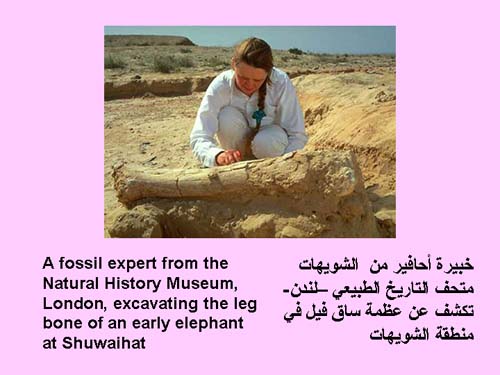
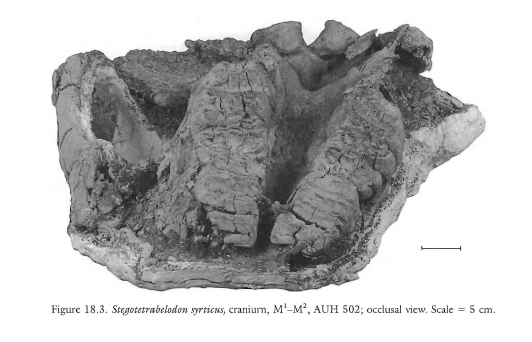
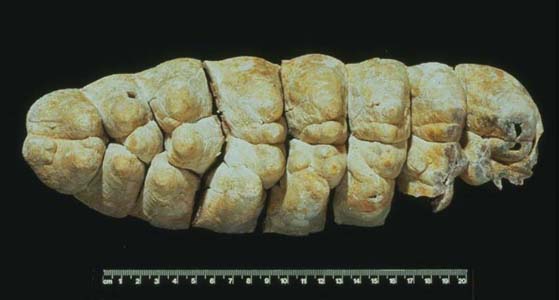
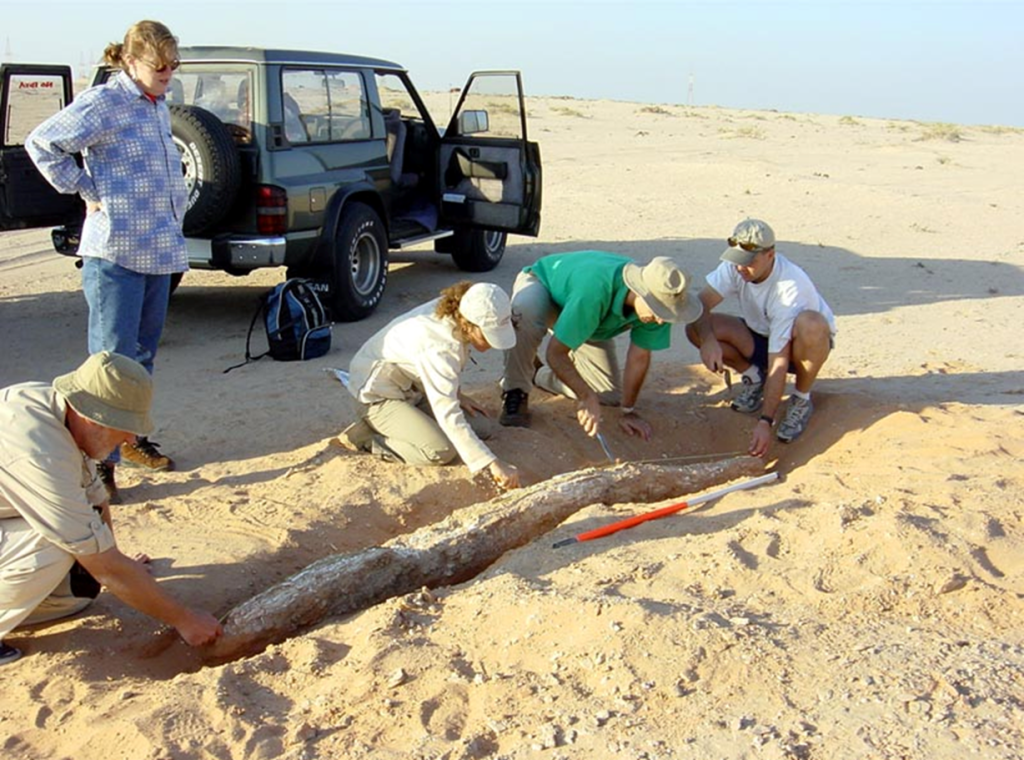
Now, for the first time, some of the most important specimens are on display in Abu Dhabi, at the headquarters of the Environment Agency - Abu Dhabi, EAD. Among the items on display are a fossil elephant tusk, nearly 2.5 metres long, discovered by ADIAS near Ruwais in 2002, and the near-complete skull, jaws and leg bone of an elephant uncovered, by a team from London's Natural History Museum, at Shuweihat in the early 1990s. These bones all belong to the primitive elephant species, Stegotetrabelodon syrticus. This extraordinary animal was larger than modern day elephants and differed from its modern day relatives by having four tusks, two upper long tusks and two shorter parallel lower tusks. The display features a ca. 20% size scale model of Stegotetrabelodon syrticus. Work on the design and production of this model took over one year to complete. The master model was produced by staff of the Taxidermy Unit of the Private Department of HH the President.
Other important fossils on display in the exhibition include examples of antelope, crocodile, giraffe, hippopotamus, horse, hyaena, monkey, ostrich, saber-toothed cat and wolverine. The fossil remains on display also include the remains of freshwater catfish and turtles, as well as freshwater clam shells. These indicate the presence of large rivers at that time. Abu Dhabi 8 million years ago was not only a land of fertile plains and rivers but also had significant numbers of trees, as witnessed by fossil acacia wood.
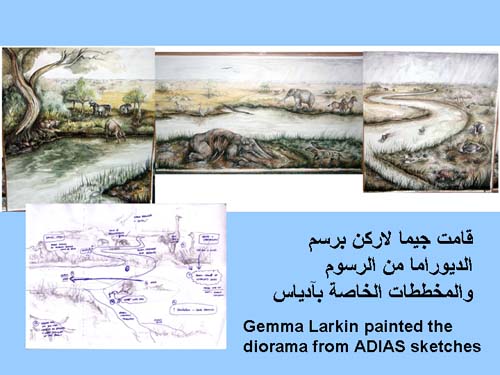
The backdrop of the fossil exhibition is a large painting of the environment of Abu Dhabi 8 million years ago. This was produced by a UK-based artist, Gemma Goodall, together with the assistance of her partner, Nigel Larkin. The painting shows how the landscape and animals living within it were quite different to those present today. You are transported back in time to 8 million years ago. It is hard to imagine that the present day desert environment of Abu Dhabi was once such a lush landscape teeming with animals and vegetation.
A book and DVD are also available accompanying the fossil exhibition. The book entitled "Abu Dhabi 8 Million Years Ago - Late Miocene Fossils from the Western Region" is edited by Dr Mark Beech and Peter Hellyer of ADIAS. The DVD features three films: a presentation about the recent fossil work carried out by ADIAS at Ruwais and Mleisa, as well as a short film called "Hot Fossils from Abu Dhabi" and a longer film called "Abu Dhabi - the Missing Link" about the earlier work on fossils carried out by the Natural History Museum, UK, and Yale University teams. Visitors to the fossil exhibition can watch all these films on the integrated display unit.
Sites with Miocene fossil faunas are distributed from Jebel Barakah in the far west of Abu Dhabi to Rumaitha in the east. The importance of these sites to the cultural and scientific heritage of the UAE lies in the fact that that they are the only locations in Arabia where the remains of fossil animals and plants have been recovered that are of international significance. The Baynunah Formation crops out in an area of about 1800 sq km, the fossils identified so far only come from a 560 sq km area, and that has not yet been surveyed in detail. More work therefore still needs to be done.
Mr. Majid Al Mansouri, Secretary General of EAD, said "We are proud to have these fossils displayed at the Agency. They convey a very important story from the UAE's history and show that it possesses the most diverse palaeontological heritage of any country in the Arabian Peninsula. This exhibition deserves to be viewed by everyone and studied by researchers and scientists."
Peter Hellyer, ADIAS Executive Director, said: "Many of the fossil sites originally discovered in the 1990s have now disappeared and others are under threat from coastal development. At the same time, there are many areas which have not been surveyed and more important sites wait to be discovered. Together with the Environment Agency - Abu Dhabi, and in line with Abu Dhabi's existing environmental protection legislation, ADIAS continues to work for proper designation of and protection of the most important sites and the areas in which they lie. They should be preserved for the long- term cultural, educational and scientific benefit of the people of the UAE."
Dr. Mark Beech, ADIAS Senior Resident Archaeologist, acted as scientific consultant for the fossil exhibition and supervised the design and construction of the display. He was also involved in the discovery of the 2.5 metre long elephant tusk at Ruwais in November 2002. Commenting just prior to the opening of the exhibition, Dr. Beech said:
"It is fantastic that we now have the opportunity to display and bring knowledge of these exciting fossil discoveries to a wider audience. We hope that this exhibition, along with the book and DVD, will introduce people of the UAE, in particular the younger generation, to this fascinating aspect of the country's past."
The display has been organised by ADIAS and EAD, with support from the Abu Dhabi Company for Onshore Oil Operations (ADCO), Takreer and BP, and with technical help from the Taxidermy Unit of the Private Department of HH the President.
The display will be officially opened on Saturday 26th November, at 10.45 am.
PICTURES
27 November 2005
8 million-year-old fossils discovered in Abu Dhabi (Source: Gulf News)
28 November 2005
A Glimpse of Life 8 Million Years Ago (Source: Khaleej Times)
29 November 2005
ADIAS PRESS RELEASE by Peter Hellyer - 29 November 2005
Launch of The Emirates – A Natural History
Remarks by Peter Hellyer, co-editor of the book
I am delighted to be here today at the official launching of The Emirates – A Natural History - It is, I think, a rather remarkable achievement. No other country in Arabia has a book like this, which documents its geology, palaeontology and natural history, both in words and stunning pictures.
This book has been part of my life for nearly four years, but it represents much more than that. It draws on the work on researchers who have worked here over the last one hundred and fifty years – if you look at the lengthy bibliography and read the first chapter, you will see references to people who first made records of the UAE's wildlife as far back as the 1850s. it is very much a joint effort.
In putting this book together, I and my co-editor, Simon Aspinall, have not only researched the past history of the study of the UAE's natural history, but we have also drawn upon the expertise of the top experts in the field today. The chapter authors include the leading specialists in the natural history of the Emirates, and we are grateful to them not only for their contributions to the book, but also for the days, months and years that they have put into studying this country. The book could not have been produced without them.
Nor could it have been produced without the skills of our publishers, Trident Press, and their talented team of artists, designers and photographers. The result is something of which we are all very proud.
It is our hope that The Emirates – A Natural History will become the basis for future studies of the country's environment and wildlife. We have written it in such a way that it is scientifically accurate, but it is also understandable for the general reader. Our objective is that anyone with an interest in the country's environment will be able to read it and to learn from it, whether they are old or young, scientist or layman.
In collaboration with the Environment Agency – Abu Dhabi (EAD), we intend in the future not only to produce editions in Arabic and other languages, but also to utilise the information in it to produce simple books and DVDs that can be used in schools – to spread the information as widely as possible.
On behalf of my co-editor and my co-authors, and on behalf of Trident Press, would like to express my thanks to those who have made its publication possible.
In particular, I would like to thank H.H Sheikh Hamdan bin Zayed Al Nahyan, Deputy Prime Minister, Minister of State for Foreign Affairs and the Chairman of EAD, for writing the Foreword, and H.E. Mohammed Al Bowardi, Secretary-General of the Abu Dhabi Executive Council and Managing Director of EAD, for writing the Introduction and for his other contributions.
One of the objectives of EAD is to promote a wider understanding of the significance of the country's environment and wildlife. That is an objective that is shared by all of us who have contributed to the book. As part of this, EAD has supported the work on this book from the very beginning. I would like to thank Majid Al Mansouri, Secretary General of EAD, for his support, and for his many contributions, including the support provided by the Agency for the cost of publishing the book. He has also been instrumental in raising support from other sponsors, including the Mubadala Development Company, First Gulf Bank, Dolphin Energy, Aldar, Total and Shell. We are grateful to them all.
Finally, we, the editors and authors, the publishers and, of course, EAD, hope that the book will not simply be used to decorate bookshelves and coffee tables. This country has remarkable and fascinating scenery and an impressively diverse array of wildlife, both onshore and in its offshore waters. The book provides only an introduction – and we hope that it will stimulate many more people to get out and about throughout the country to look at the UAE's natural history. There is enough here to fascinate anyone with a sense of curiosity or a love of beauty for a whole lifetime.
Last updated: 13 October 2025